Proudly serving Phoenix, Mesa, Scottsdale, Tempe, Chandler, Glendale & surrounding areasCall or Text 24/7: 480-300-4493
Aerial drone view of a residential neighborhood with Saguaro cacti and stucco homes in Phoenix, AZ.

VRF System Installation, Repair & Multi-zone Maintenance in Phoenix, AZ

Phoenix Commercial HVAC provides VRF system installation, repair, and maintenance for commercial properties in Phoenix and across Maricopa County. Our VRF service supports multi-zone systems in office towers, medical buildings, hotels, and mixed-use developments. We also diagnose refrigerant circuits, branch controllers, indoor units, inverter-driven compressors, and building-management connections. Each visit is focused on restoring dependable zone control for the building's actual operating demands.

Phoenix heat can keep rooftop equipment working above 115°F ambient temperatures for weeks, exposing charge, airflow, controls, and compressor problems. VRF equipment requires manufacturer-specific diagnostic tools and an understanding of variable-speed logic rather than trial-and-error parts replacement. Our factory-trained technicians handle opened refrigerant circuits under EPA Section 608 requirements and ASHRAE 15 safety standards. Arizona Registrar of Contractors credentials and coordination with Phoenix and Maricopa County permit offices support installation and major replacement work.

When a refrigerant circuit is opened, our process can include nitrogen purging, pressure testing at 550–650 psi depending on refrigerant type, and vacuum decay testing before charging.

Phoenix Commercial HVAC provides VRF system service across Phoenix and supported metro-area communities including Scottsdale, Tempe, Mesa, and Chandler.

★ ★ ★ ★ ★4.9/5.0 Customer Rating · 31 Years of HVAC Experience · Thousands of Commercial Systems Serviced · Licensed, Bonded & Insured · Serving Commercial & Industrial Properties

VRF System Options & Benefits

How Does Variable Refrigerant Flow Work?

Variable Refrigerant Flow technology uses inverter-driven compressors to modulate refrigerant volume as individual zones call for heating or cooling. Unlike conventional equipment that repeatedly cycles a single compressor, the system adjusts output to real-time demand.

That control is useful when a west-facing conference room and a north-facing server closet carry very different loads at 3 p.m. in July. Heat-recovery configurations can even cool one zone while heating another, reducing the overcooling and overheating common with single-zone distribution.

Department of Energy field studies measured cooling-season energy savings around 19.8%, while industry data places total energy reduction at 30–40% compared with conventional rooftop units in comparable applications. The difference can be meaningful for a 20,000-square-foot Phoenix office building carrying cooling loads nine months of the year.

Benefits of Professional VRF Service

Properly designed and maintained VRF equipment can match output to changing commercial loads while giving facility teams closer control over individual spaces.

  • Zone-by-zone temperature control for spaces with different loads
  • Simultaneous heating and cooling with heat-recovery configurations
  • Variable compressor output instead of fixed on-and-off cycling
  • Central scheduling and monitoring through supported BMS connections
  • Indoor-unit choices for different room and ceiling conditions
  • Partial-zone recovery when an unaffected circuit can remain online
  • Documented commissioning readings for facility maintenance records
  • Reduced compressor strain when charge, airflow, and coils stay within target
Commercial VRF Services

Complete VRF System Services

From system design through fault diagnosis and scheduled care, our VRF work covers the refrigerant, airflow, electrical, and control components that keep multiple commercial zones operating together.

VRF System Installation

Ceiling-mounted VRF system installation in a commercial office with an accent wall in Phoenix, AZ.

Commercial VRF installation starts with a zone-by-zone load calculation, then coordinates outdoor units, indoor units, refrigerant piping, dedicated electrical circuits, and control wiring. We design around the building envelope and Phoenix's IECC Climate Zone 2B conditions.

Request Estimate

VRF Repair and Diagnostics

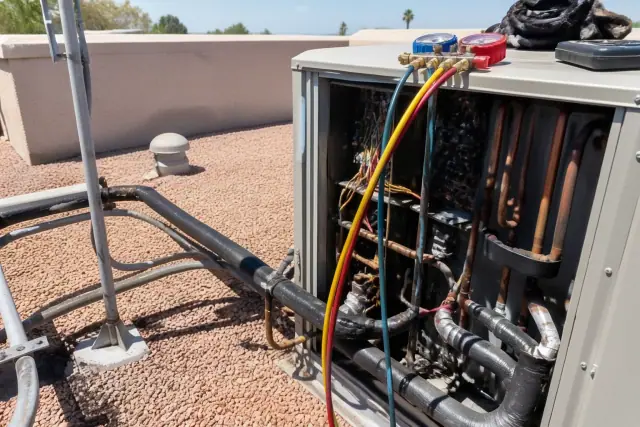
Technician performing VRF system repair on a commercial rooftop in Phoenix, AZ with copper lines and gauges visible.

Manufacturer-specific service tools, amperage readings, and superheat and subcooling measurements help trace the root cause of multi-unit fault codes. This approach separates control, charge, and compressor issues before parts are replaced.

Request Estimate

Preventative VRF Maintenance

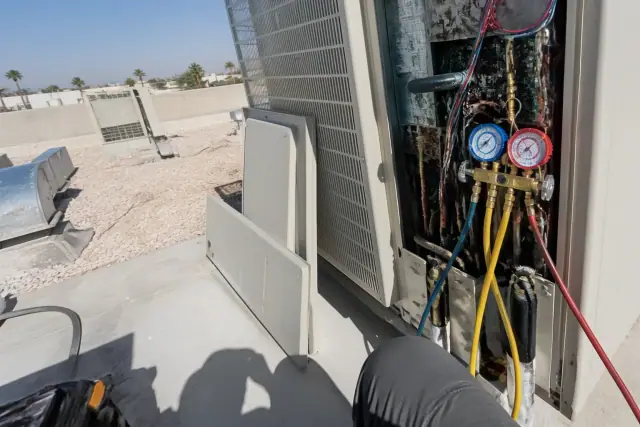
Technician performing VRF maintenance with manifold gauges on a rooftop in Phoenix, AZ.

Phoenix VRF maintenance typically runs quarterly, with an added pre-summer inspection before the extended cooling season from March through October. Each visit can address refrigerant charge, filters, coils, sensors, firmware, and BMS communication points.

Request Estimate

Refrigerant Leak Detection and Repair

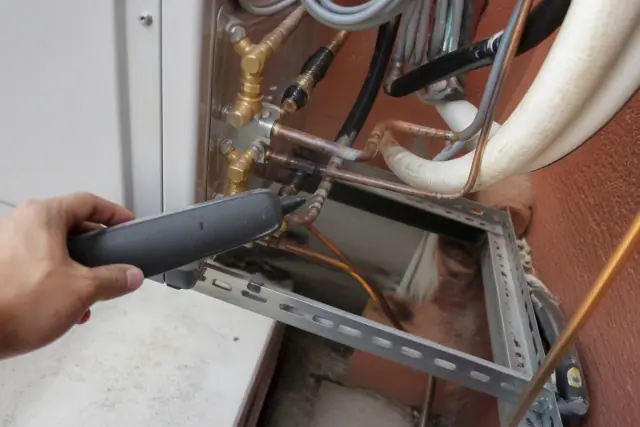
Electronic leak detector wand held over brazed copper refrigerant lines on a VRF system in Phoenix, AZ.

Electronic leak detectors and nitrogen pressure-decay testing help isolate charge loss along long copper runs and at brazed joints. This is especially important when rooftop-to-interior temperature swings exceed 80 degrees and repeatedly stress connections.

Request Estimate

VRF Controls and BMS Integration

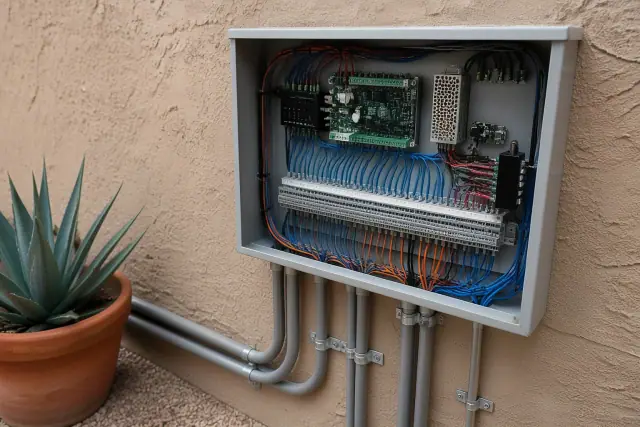
Neatly routed VRF control wiring and BMS integration in a mechanical utility area in Phoenix, AZ.

We diagnose BACnet and Modbus gateways, address settings, branch-controller communication, sensor calibration, and scheduling issues. Controls work can also involve energy monitoring and fire-alarm interlocks within a smart-building platform.

Request Estimate

Emergency VRF System Recovery

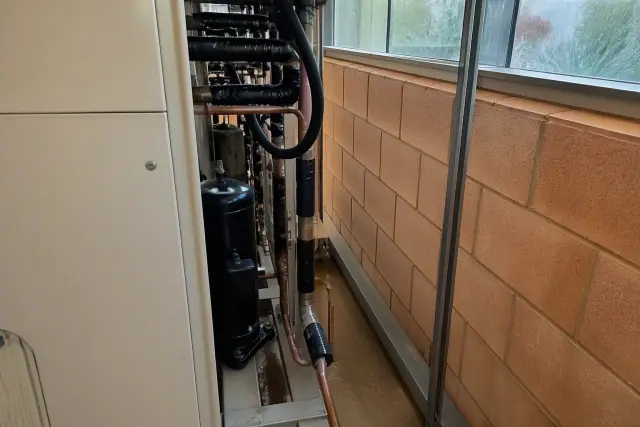
Copper refrigerant lines and a compressor unit in a mechanical room in Phoenix, AZ.

When unconditioned commercial spaces can climb into the 90s within hours, we focus first on isolating the failed circuit and restoring unaffected or critical zones where the system allows. Same-day completion depends on the fault and specialty-parts availability, and every emergency visit includes documented readings, replaced parts, and restart performance.

Request Estimate
Equipment and Controls

VRF Equipment and Control Options

The right configuration depends on how zones behave, where outdoor equipment can reject heat, how refrigerant lines can be routed, and which controls the facility team needs to monitor.

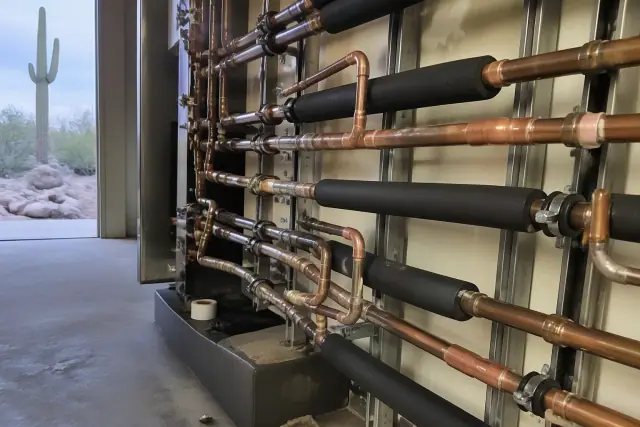
Insulated copper refrigerant lines and a VRF system manifold at a jobsite in Phoenix, AZ.

Heat-Recovery VRF Configurations

Heat-recovery VRF configurations can cool one commercial zone while heating another through the same coordinated system. They are suited to buildings where solar exposure, occupancy, and equipment loads vary by floor or room.

  • Simultaneous heating and cooling across different zones
  • Branch-selector control for multi-zone refrigerant flow
  • Responsive control for changing solar gain
  • Useful zoning for multi-story commercial properties
  • Less overcooling and overheating than single-zone distribution
Request Estimate
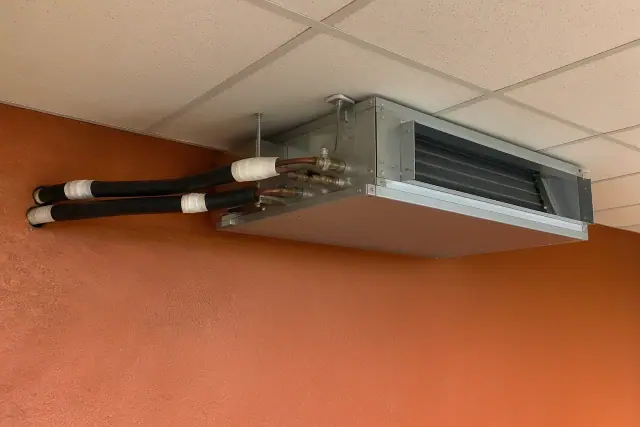
Ceiling-mounted VRF unit with insulated copper refrigerant lines on a stucco wall in Phoenix, AZ.

Heat-Pump VRF Configurations

Heat-pump VRF configurations provide efficient cooling and heating for Phoenix's hot, dry climate and mild winters. Outdoor-unit condition, heat rejection, and working defrost sensors still matter when overnight desert temperatures drop.

  • Variable-speed cooling for extended summer operation
  • Heat-pump operation for mild Phoenix winters
  • Defrost-sensor checks for cold desert mornings
  • Outdoor-coil cleaning for better heat rejection
  • Charge verification against manufacturer targets
Request Estimate
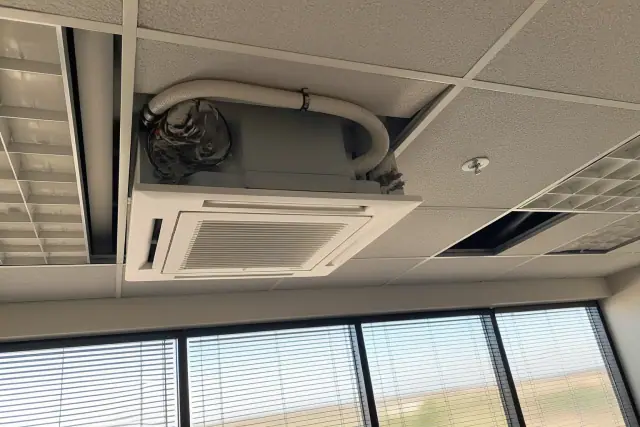
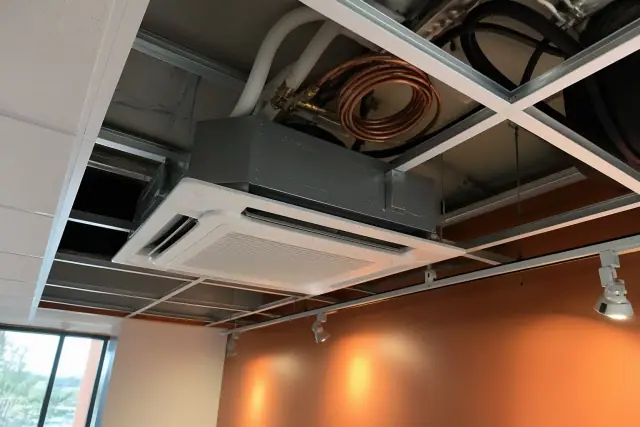
Ceiling-mounted VRF indoor unit installation in a Phoenix, AZ office with exposed wiring and refrigerant lines.

VRF Indoor Unit Configurations

Indoor-unit selection should match each space's function, ceiling structure, return-air path, and condensate-drainage needs. Correct placement helps prevent airflow restriction and water complaints above finished commercial spaces.

  • Ducted units for concealed air distribution
  • Ceiling cassettes for open commercial rooms
  • Wall-mounted units where ceiling space is limited
  • Floor consoles for spaces suited to low-wall placement
  • Planned return-air paths and condensate drainage
Request Estimate
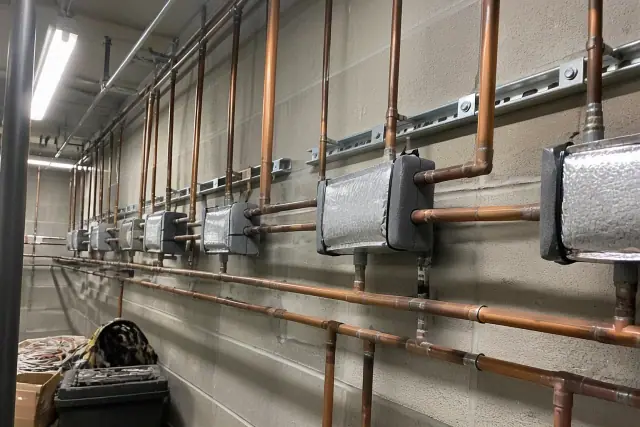
Refrigerant piping and insulated branch selector boxes installed in a mechanical room in Phoenix, AZ.

Refrigerant Piping and Branch Controls

VRF piping design must stay within manufacturer maximum lengths and elevation limits between indoor and outdoor units. Branch controllers route refrigerant under changing pressure conditions, so joint quality and commissioning records are essential.

  • Manufacturer-specified pipe-length limits
  • Verified elevation limits between connected units
  • Nitrogen purging during refrigerant work
  • Pressure and vacuum-decay test documentation
  • Insulation and charge checks before commissioning
Request Estimate
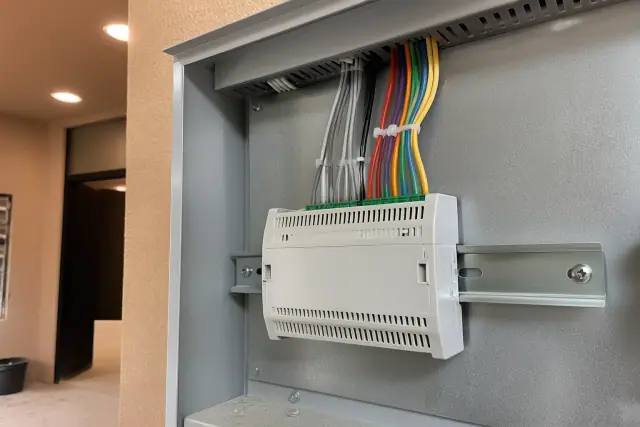
Building automation gateway with ethernet cables mounted in a cabinet at a jobsite in Phoenix, AZ.

Building Automation Gateway Options

VRF controls can connect with commercial building automation through supported gateways. Correct setup keeps zone addressing, scheduling, sensors, and remote monitoring aligned with the equipment's control logic.

  • BACnet gateway diagnostics
  • Modbus communication checks
  • Central scheduling and remote monitoring
  • Sensor calibration and control-point programming
  • Fire-alarm interlock coordination
Request Estimate
Choosing the Right Team

Choosing the Right VRF Service Approach

The service plan should reflect the installed VRF platform, fault history, zone priorities, piping layout, building controls, and Phoenix operating conditions. An on-site assessment can distinguish a repairable component problem from a maintenance issue or a system design limitation.

Factory-Trained VRF Diagnostics

Our technicians maintain factory training on the major VRF platforms operating in the Phoenix market. Manufacturer software, fault-code analysis, amperage testing, and refrigerant measurements help us diagnose interconnected equipment without speculative part replacement.

Standards-Based Refrigerant Handling

Opened refrigerant circuits are handled under EPA Section 608 requirements and ASHRAE 15 safety standards. For installation and major replacement, our licensed technicians also coordinate applicable permitting with the City of Phoenix and Maricopa County.

Phoenix Commercial Building Focus

Our VRF division is built around the different demands of office towers, medical buildings, hotels, mixed-use developments, multi-tenant properties, and restaurants. We account for desert dust, long cooling seasons, rooftop heat, and the need to keep critical zones operating.

What Sets Us Apart

Why Choose Phoenix Commercial HVAC for VRF Service?

VRF service combines refrigeration, electrical, controls, and commercial-building knowledge. Phoenix Commercial HVAC brings those disciplines together for installation, diagnostics, maintenance, commissioning, and documented repair decisions.

Request VRF Assessment

Refrigerant Leaks and Charge Loss

Extended copper runs and repeated thermal expansion can stress brazed joints and flare fittings. We use electronic leak detection and nitrogen pressure-decay testing to locate charge loss before correcting the circuit.

Communication and Addressing Faults

Damaged low-voltage wiring, incorrect address settings, and branch-controller failures can generate fault codes and shut down complete zones. Diagnosis requires tracing communication among indoor units, selector boxes, and outdoor condensers with platform-specific tools.

Inverter Compressor Degradation

VRF inverter compressors typically run 10–15 years before major service is needed, but incorrect charge or oil return can accelerate wear in Phoenix heat. Amperage draw, superheat, and subcooling measurements help distinguish compressor degradation from a broader circuit problem.

Indoor-Unit Airflow and Drainage Problems

Dirty coils, clogged filters, failed condensate pumps, and blocked drain lines can restrict airflow or cause water damage. Ceiling cassettes above finished spaces need particular attention to drainage and pump operation.

BMS Gateway and Control Failures

BACnet or Modbus gateway failures can interrupt schedules, remote monitoring, and communication between VRF controls and the building automation platform. Firmware checks, sensor calibration, and control-point testing help isolate the interruption.

Defrost Cycle Failures

Although Phoenix winters rarely freeze, overnight desert temperature drops still trigger defrost cycles on heat-pump VRF equipment. A failed defrost sensor can leave an outdoor coil iced over by morning and reduce system performance.

How It Works

Our VRF Installation and Commissioning Process

A commercial VRF project moves from load analysis and equipment placement through piping, electrical controls, and final commissioning. Each step is coordinated around the building's zones, operating needs, and Phoenix conditions.

01.

Assess Loads and Map Zones

We begin with a Manual N calculation or equivalent commercial load software, mapping demand across the building envelope zone by zone. Phoenix's IECC Climate Zone 2B classification informs the insulation and glazing assumptions.

02.

Plan Outdoor Unit Placement

The outdoor-unit plan addresses airflow clearance, current-code seismic and wind-load anchoring, foundation needs, and shading. These choices reduce added heat-rejection strain when dark rooftop membranes routinely exceed 140°F.

03.

Match Indoor Units to Each Space

We match ducted, cassette, wall-mounted, or floor-console units to room function and ceiling structure. Return-air paths and condensate drainage slopes are planned with the selected placement.

04.

Route and Test Refrigerant Lines

Piping routes must remain within the manufacturer's length and elevation limits. Joints are pressure-tested before insulation and charging, with results retained in the commissioning record.

05.

Connect Electrical and Controls

Dedicated circuits, disconnects, and low-voltage wiring are installed to code. We coordinate address settings, branch-control logic, and building automation connections for centralized management.

06.

Commission and Verify Performance

Final commissioning confirms airflow, refrigerant charge, sensor response, and programmed control points before turnover. The performance readings provide a baseline for future service and maintenance decisions.

Plan Your VRF Service

Schedule a VRF System Assessment

Tell us about the affected zones, fault codes, comfort complaints, or upcoming installation. We can evaluate the equipment and provide a written estimate for the recommended VRF service scope.

VRF Service Help

Phoenix VRF System FAQs

These answers cover common questions about VRF repair, installation, maintenance, controls, and service planning for Phoenix commercial properties. A system-specific assessment is still important because equipment configuration and fault history affect the right next step.

Call Our VRF Team

Common Phoenix VRF problems include refrigerant leaks at brazed joints, communication faults between indoor units and branch controllers, compressor-amperage problems related to charge loss, and clogged filters or drains. Building automation integration faults also occur, especially where older installations use newer BMS software. Electronic leak detection, pressure readings, superheat and subcooling checks, and manufacturer software help identify the actual cause.

Look for factory training on the installed VRF platform, EPA certification for refrigerant handling, commercial HVAC licensing, and experience with branch controllers and multi-zone circuits. Phoenix Commercial HVAC maintains factory training on major local VRF platforms, Arizona Registrar of Contractors credentials, and EPA Section 608 certification. Ask a provider to document comparable commercial VRF work before making a decision.

VRF compressors typically last 10-15 years, while the overall system—including indoor units, piping, and controls—is generally rated for 15-20 years with proper maintenance. Phoenix heat can move equipment toward the lower end if charge, airflow, and coil cleanliness are neglected. Replacing a branch controller or indoor-unit fan motor may extend useful service without replacing the full system.

VRF equipment has higher design complexity, specialized parts, and manufacturer-specific diagnostic requirements. For a typical 20,000-square-foot commercial installation, published data places VRF projects at $26,000-$36,000 and 3-6 weeks, compared with $15,000-$20,000 and 1-2 weeks for a comparable conventional rooftop replacement. Piping length and elevation limits can also constrain some multi-story retrofits.

Full commercial HVAC repair calls in the Phoenix market average around $362, with a source-supported range of $134-$2,066 depending on the issue and equipment type. VRF compressor diagnostics, branch-controller replacement, and refrigerant-leak repair can fall toward the higher end because they require specialized labor and parts. We provide a written estimate after an on-site assessment.

Properly sized and maintained VRF systems can perform well in Phoenix's hot, dry climate, while heat-pump configurations also suit the area's mild winters. The main local concerns are outdoor-unit heat rejection during extended triple-digit weather and faster filter and coil fouling from desert dust. Placement, shading, cleaning, and charge verification therefore matter.

VRF preventative maintenance in this market typically runs quarterly, with an additional pre-summer inspection. Phoenix's extended cooling season often lasts from March through October, so checking charge, filters, coils, electrical components, sensors, and controls before peak demand can reduce disruption.

Yes, heat-recovery VRF configurations can provide heating to one zone while cooling another. That capability is useful in multi-story buildings where lower floors may need morning heat while upper floors still carry cooling demand from solar gain.

We use electronic leak detectors and nitrogen pressure-decay testing to isolate leaks along copper piping and at flare fittings or brazed joints. Charge condition is also checked against manufacturer superheat and subcooling targets. This avoids guessing across a long multi-zone refrigerant network.

VRF controls can connect through supported BACnet or Modbus gateways for scheduling, monitoring, and control-point management. Service may involve checking gateway communication, addresses, firmware, sensors, and fire-alarm interlocks. Compatibility depends on the installed VRF platform and building automation setup.

The first priority is to isolate the failed circuit and restore partial or critical-zone operation where the configuration permits. Server rooms, kitchens, patient areas, and other operationally important spaces may be addressed first. Same-day completion depends on the fault and whether a specialty board or inverter compressor must be sourced.

Professional commissioning confirms airflow, refrigerant charge, and control-point programming before turnover. It also verifies that indoor units, outdoor equipment, branch controls, sensors, and building-management connections respond as intended. Recorded results create a useful baseline for later maintenance.

We provide VRF installation, repair, and maintenance for office towers, medical buildings, hotels, mixed-use developments, multi-tenant offices, and restaurant properties. Service coverage includes Phoenix, Scottsdale, Tempe, Mesa, Chandler, and the broader Phoenix metropolitan area.