Proudly serving Phoenix, Mesa, Scottsdale, Tempe, Chandler, Glendale & surrounding areasCall or Text 24/7: 480-300-4493
Aerial drone view of a residential neighborhood with Saguaro cacti and stucco homes in Phoenix, AZ.

Commercial Indoor Air Assessment & Ventilation Testing in Phoenix, AZ

Phoenix Commercial HVAC provides commercial indoor air quality services for businesses in Phoenix, Arizona. Our work includes complete IAQ assessments, continuous particulate and CO2 monitoring, carbon monoxide testing, VOC source identification, and mold inspection. Technicians connect measurements to rooftop units, VRF systems, split systems, kitchen exhaust, and building automation controls. Recommendations reflect the building's actual equipment and operating conditions.

The Salt River Valley's bowl-shaped geography can trap dust, vehicle exhaust, and summer ozone near the valley floor during temperature inversions. Rooftop units that draw outdoor air can pull that load into commercial ductwork. Our technicians hold Arizona Registrar of Contractors licensing and NATE certification, and testing follows ASHRAE Standard 62.1 and EPA guidance. We walk the building and measure conditions before recommending changes.

Phoenix has more than 1.6 million residents across 517.9 square miles, creating a broad commercial environment where outdoor particulate, pollen, and airborne chemical exposure can vary by site and operating schedule. An equipment-aware assessment shows what is entering the building, how the HVAC system is responding, and which actions deserve priority.

Phoenix Commercial HVAC provides commercial indoor air quality services across Phoenix and the greater metro area, including Scottsdale, Tempe, Mesa, Chandler, and Glendale.

★ ★ ★ ★ ★4.9/5.0 Customer Rating · 31 Years of HVAC Experience · Thousands of Commercial Systems Serviced · Licensed, Bonded & Insured · Serving Commercial & Industrial Properties

Commercial IAQ Options & Benefits

What Is Commercial Indoor Air Quality Testing?

Commercial indoor air quality testing evaluates the mix of outdoor intrusion, biological growth, off-gassing materials, ventilation, and HVAC conditions affecting occupied spaces. A complete assessment looks beyond a single symptom to identify how those factors work together inside the building.

We use direct-read instruments for particulate matter, VOCs, carbon monoxide, carbon dioxide, humidity, and temperature. Airflow hoods measure supply CFM, while ductwork inspection and building automation trends help connect readings to RTUs, VRF systems, split systems, or kitchen exhaust.

The resulting report compares measured values with EPA and ASHRAE reference ranges and includes photos plus prioritized recommendations. Depending on the findings, those priorities may include filter upgrades, duct sealing, RTU replacement, controls adjustments, or a ductwork rebalance, with rough cost ranges attached.

Benefits of a Commercial IAQ Assessment

The World Green Building Council has found that improved indoor air quality can raise occupant productivity by 8-11% and reduce respiratory-related health complaints by up to 4.5%. Because people spend more than 90% of their time indoors, measured improvements to the air moving through a commercial building can support both occupant comfort and facility decisions.

  • Measures particulate matter, VOCs, CO, and CO2 instead of relying on guesswork
  • Logs humidity and temperature to reveal conditions that change over time
  • Verifies supply and return airflow against original HVAC design specifications
  • Relates outdoor air intake locations to Arizona Department of Environmental Quality forecast data
  • Identifies moisture, staining, dirty coils, and drain-pan conditions during inspection
  • Matches filtration recommendations to the system's available static-pressure capacity
  • Creates documentation for tenants, insurers, regulators, and internal facility audits
  • Prioritizes practical HVAC, filtration, ventilation, and control changes
Commercial IAQ Services

Commercial Indoor Air Quality Services

Commercial IAQ work can combine a one-time assessment with targeted pollutant testing, equipment inspection, and continuous monitoring. The right scope depends on the complaint, occupancy pattern, combustion sources, recent material changes, and the HVAC equipment serving the space.

Complete IAQ Assessments

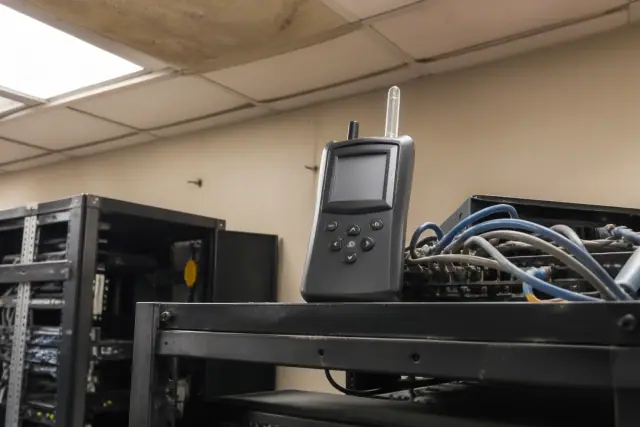
Portable air quality monitor on a server rack shelf inside a Phoenix, AZ server room.

A complete assessment covers particulate matter, carbon monoxide, VOCs, humidity and temperature logging, plus airflow measurement at supply and return points. We also document outdoor air intake locations and compare them with Arizona Department of Environmental Quality forecast data for the day of testing.

Request Estimate

Continuous Air Quality Monitoring

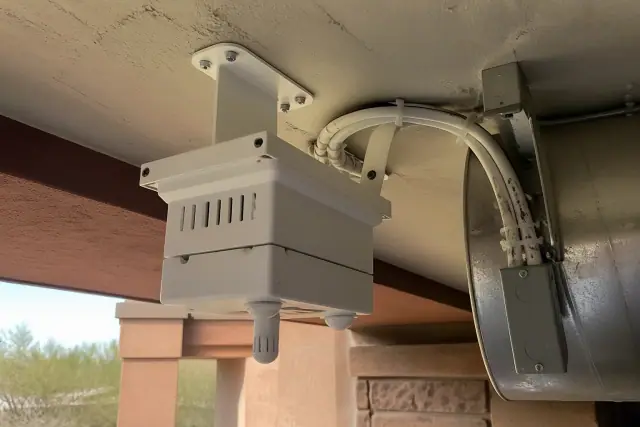
Air quality sensor mounted to a ceiling bracket in a Phoenix, AZ commercial building.

Installed sensors can track particulate and CO2 continuously and feed readings into a building automation platform. Logged trends show what happens during a dust storm or peak occupancy hour, while control-linked alerts can flag a CO spike or ventilation failure.

Request Estimate

Carbon Monoxide Testing

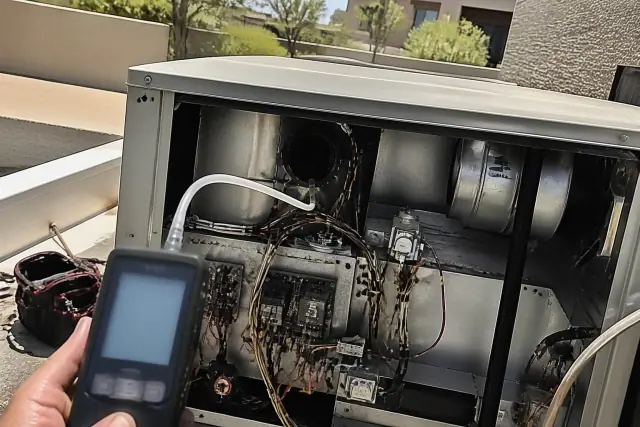
Technician performing carbon monoxide testing on an open rooftop HVAC unit in Phoenix, AZ.

We use calibrated electrochemical sensors meeting UL 2034 performance standards around gas-fired rooftop units, water heaters, kitchen cooking lines, loading docks, attached garages, and mechanical rooms. OSHA's permissible exposure limit is 50 ppm averaged over an eight-hour shift, providing an important reference for commercial risk evaluation.

Request Estimate

VOC Testing and Source Identification

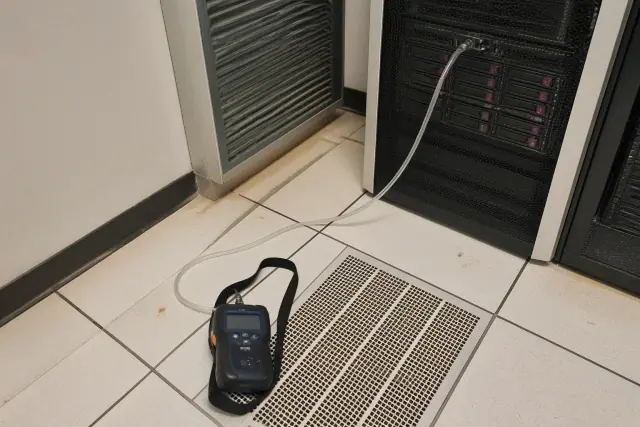
Technician using an air quality sampling pump to test for VOCs near a server rack in a Phoenix, AZ facility.

Photoionization detectors help trace volatile organic compounds to recent paint, adhesives, carpet, cleaning chemicals, printing equipment, nail salons, or dry-cleaning operations. When compound-specific analysis is needed, samples can be sent to a certified laboratory for comparison with EPA reference concentrations.

Request Estimate

Commercial Mold Inspection

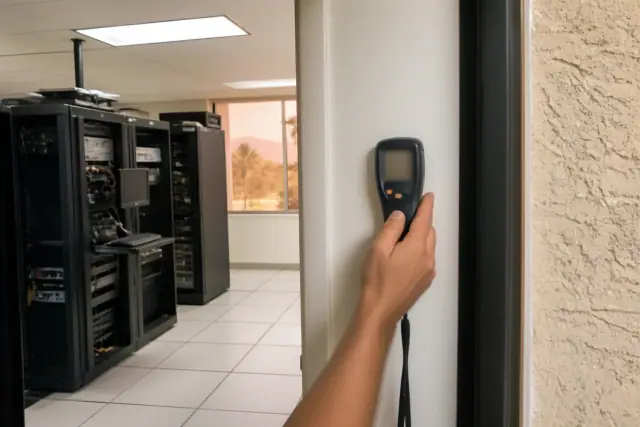
Moisture meter pressed against a wall panel during a commercial mold inspection in a Phoenix, AZ server room.

Desert conditions do not eliminate mold risk inside commercial HVAC equipment. We inspect coils, drain pans, duct interiors, humid mechanical rooms, and ceiling tiles near diffusers for condensation, clogs, staining, discoloration, or musty odors associated with active or dormant growth.

Request Estimate

HVAC Filtration and Ventilation Review

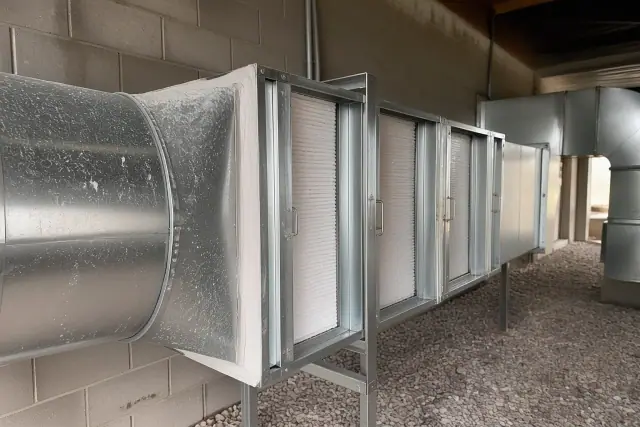
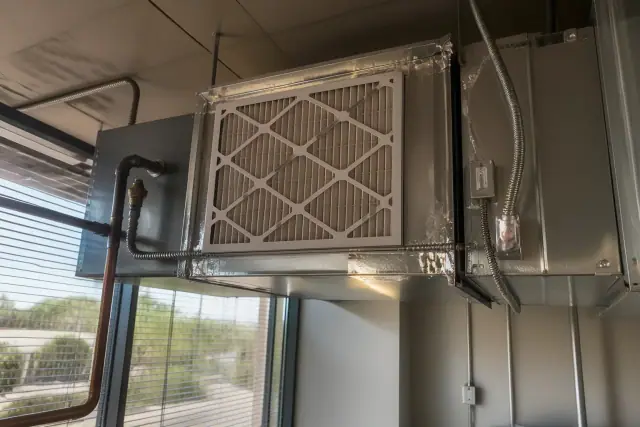
HVAC filtration housing with HEPA filters and ductwork in a commercial building in Phoenix, AZ.

Filtration and ventilation recommendations are tied to the equipment that must support them. The review may consider MERV 13-16 media rated to ASHRAE 52.2, outdoor-air ventilation under ASHRAE Standard 62.1, activated-carbon stages, source removal, controls changes, or a full ductwork rebalance.

Request Estimate
Testing, Monitoring, and Control

Commercial IAQ Testing and Control Methods

A useful commercial IAQ plan combines measurement, visual inspection, system data, and corrective priorities. These methods show both what is in the air and how the HVAC system, occupancy, and building materials are influencing the readings.

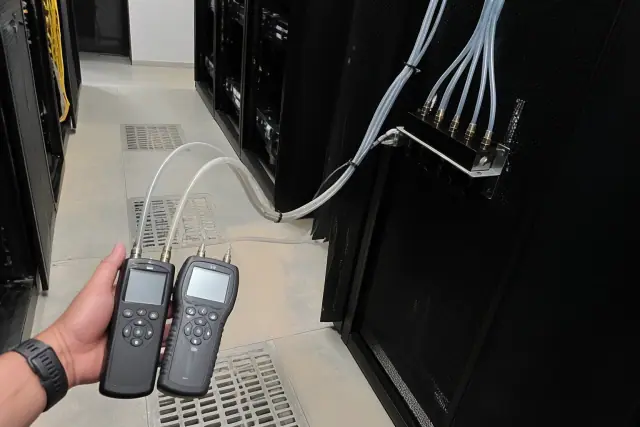
Handheld air quality sensor testing in a Phoenix, AZ server room with dust on the floor and drainage covers.

Direct-Read Instrument Testing

Calibrated direct-read instruments capture conditions in occupied spaces and around suspected sources. Each tool addresses a different part of the air-quality picture.

  • Particle counters for airborne particulate levels
  • Photoionization detectors for VOC screening
  • CO and CO2 analyzers for combustion and ventilation conditions
  • Moisture meters for damp materials and HVAC areas
  • Airflow hoods for supply CFM verification
Request Estimate
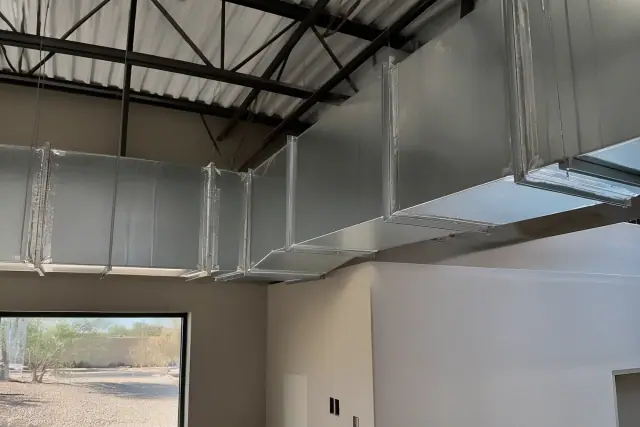
Galvanized steel ductwork suspended from a high industrial ceiling in a warehouse facility in Phoenix, AZ.

HVAC and Ductwork Inspection

The inspection establishes context before instrument readings are interpreted. We document equipment and visible conditions that can explain how pollutants enter, collect, or move through the building.

  • Mechanical rooms and rooftop units
  • Supply and return ductwork runs
  • Filter condition and coil cleanliness
  • Drain pans, visible moisture, and staining
  • Occupied spaces and ceiling tiles near diffusers
Request Estimate
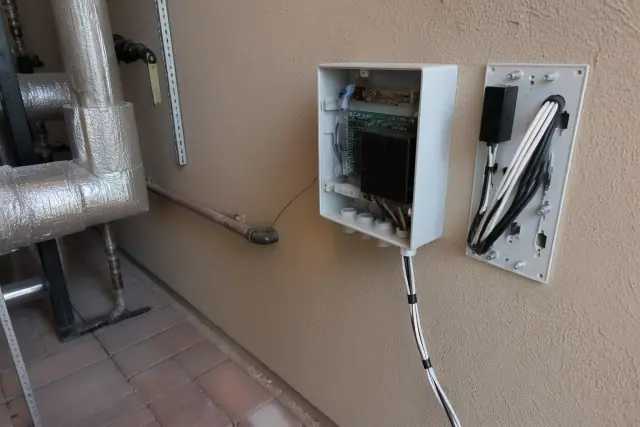
Wall-mounted indoor air quality sensor with exposed wiring in a mechanical room in Phoenix, AZ.

Continuous Sensor Monitoring

Continuous monitoring adds time and occupancy context that a one-day test cannot capture. Facility staff can review real-time conditions and retain a record for operational or documentation needs.

  • Continuous particulate tracking
  • Continuous CO2 tracking
  • Building automation platform integration
  • Trend logging for dust storms and busy occupancy hours
  • Threshold alerts tied to HVAC controls
Request Estimate
Technician installing a high-efficiency media filter in ductwork at an office facility in Phoenix, AZ.

Filtration and Ventilation Improvements

Corrective options depend on measured conditions and the mechanical system's capabilities. Recommendations balance ventilation, filtration, source control, and airflow rather than applying the same upgrade to every building.

  • Outdoor-air ventilation rates aligned with ASHRAE Standard 62.1
  • MERV 13-16 filtration media when the system can support it
  • Filter media rated to ASHRAE 52.2
  • Static-pressure review before filtration changes
  • Activated carbon, source removal, controls adjustments, or duct balancing
Request Estimate
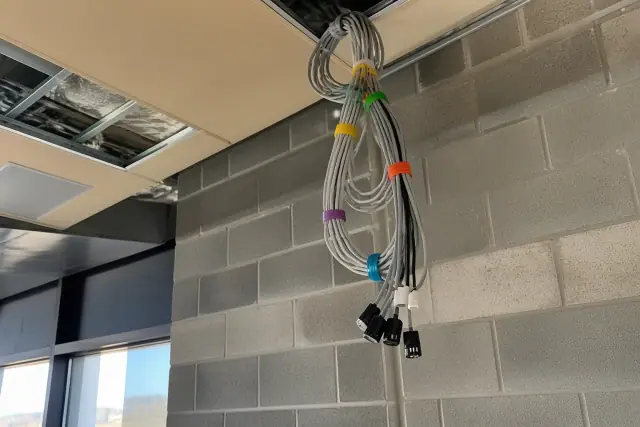
Bundled sensor cables with color-coded ties at a commercial indoor air quality jobsite in Phoenix, AZ.

Written Findings and Priorities

A written report turns observations and measurements into an ordered facility plan. It preserves the evidence behind each recommendation for internal review or outside documentation.

  • Measured values compared with EPA and ASHRAE reference ranges
  • Photos of relevant equipment and building conditions
  • Priorities for filter upgrades and duct sealing
  • RTU replacement or controls adjustments when findings support them
  • Rough cost ranges attached to prioritized recommendations
Request Estimate
Finding the Right Fit

Choosing the Right Commercial IAQ Approach

A focused complaint may call for targeted CO, VOC, moisture, or particulate testing, while a variable or recurring issue may benefit from continuous monitoring. We match the scope to the building's RTUs, VRF systems, split systems, kitchen exhaust, controls, occupancy pattern, and documentation needs.

Arizona-Licensed, NATE-Certified Technicians

Our technicians hold Arizona Registrar of Contractors licensing and NATE certification. That technical background supports careful testing around commercial HVAC equipment and occupied spaces.

Standards-Based IAQ Testing

Testing protocols follow ASHRAE Standard 62.1 for commercial ventilation and EPA guidance on indoor pollutant thresholds. Filtration recommendations can also reference ASHRAE 52.2 when the system supports higher-efficiency media.

Equipment-Specific Recommendations

Readings are evaluated in the context of the equipment serving the space, including RTUs, VRF systems, split systems, and kitchen exhaust. This prevents a generic recommendation from ignoring airflow, controls, or static-pressure limitations.

What Sets Us Apart

Why Choose Phoenix Commercial HVAC for IAQ Testing?

We inspect the building before recommending corrective work, then connect measured values, equipment condition, and operating trends in one report. Call to discuss the concern and arrange a walkthrough for your Phoenix commercial property.

Request an IAQ Assessment

Desert Dust and Ozone Intrusion

Temperature inversions in the bowl-shaped Salt River Valley can hold PM10 desert dust, vehicle exhaust, pollen, and summer ozone near the valley floor. Rooftop units pulling outdoor air may carry that load into ductwork and occupied areas.

Elevated CO2 and Low Ventilation

Undersized ventilation can allow CO2 to rise as occupancy increases. Continuous sensors and airflow measurements help show whether the issue peaks during the building's busiest hours or follows a broader controls problem.

Carbon Monoxide Exposure

Gas ranges, water heaters, gas-fired rooftop units, loading docks, attached garages, and aging combustion equipment can create higher-risk areas for CO buildup. Immediate testing is appropriate when staff report headaches, dizziness, or fatigue tied to a specific room.

VOC Off-Gassing

New paint, adhesives, carpet, furnishings, and cleaning chemicals can off-gas VOCs for weeks or months after installation. Poor ventilation can let those compounds build up, while on-site processes such as printing, nail services, or dry cleaning may create additional sources.

Moisture and Mold Growth

Condensation on coils, clogged drain pans, and humid mechanical rooms can create the moisture mold needs even in Phoenix's desert climate. Staining, discoloration, and musty odors near diffusers or inside HVAC components can guide a closer inspection.

Hidden HVAC Airflow Problems

Filter selection, duct leakage, supply CFM, controls, and equipment design all affect how a commercial system moves outdoor and recirculated air. A recommendation should account for those conditions before changing filtration or ventilation settings.

How It Works

Our Commercial Indoor Air Quality Process

Every assessment follows a structured process so findings are repeatable and defensible. The sequence moves from building and equipment documentation to calibrated testing, system analysis, and a written set of priorities.

01.

Building Walkthrough and Documentation

We inspect mechanical rooms, rooftop units, ductwork runs, and occupied spaces before testing. Photos document filter condition, coil cleanliness, visible moisture, and staining.

02.

HVAC and Moisture Inspection

Coils, drain pans, duct interiors, ceiling tiles, and other moisture-prone areas are checked for clogs, condensation, discoloration, and musty odors. This inspection helps place later instrument readings in the right building context.

03.

Calibrated Instrument Testing

Calibrated particle counters, VOC photoionization detectors, CO and CO2 analyzers, and moisture meters capture conditions in selected areas. The testing plan follows the complaint, possible sources, and equipment serving each space.

04.

Airflow and Controls Review

Airflow hoods verify supply CFM against original HVAC design specifications. We also review outdoor-air intake locations and building automation trends to see how airflow and controls influence conditions.

05.

Reference-Based Evaluation

Measured values are compared with EPA and ASHRAE reference ranges. Outdoor observations are cross-referenced with Arizona Department of Environmental Quality forecast data for the day of testing.

06.

Written Priorities and Recommendations

The final report includes measurements, photos, and prioritized recommendations with rough cost ranges. Supported actions may include filter upgrades, duct sealing, RTU replacement, controls adjustments, ventilation changes, or source removal.

Plan Your Assessment

Schedule a Commercial IAQ Assessment

Call Phoenix Commercial HVAC to arrange a commercial indoor air quality walkthrough in Phoenix. We will review the building and its HVAC equipment before recommending testing, monitoring, filtration, ventilation, or control changes.

Commercial IAQ Help

Commercial Indoor Air Quality FAQs

These answers cover commercial IAQ testing, monitoring, pollutants, equipment, and reporting for Phoenix facilities. Call if you need help matching the assessment scope to a specific building concern.

Call About IAQ Testing

An assessment can cover particulate matter, carbon monoxide, VOCs, humidity and temperature logging, plus supply and return airflow. It also documents intake locations, equipment condition, visible moisture, and other building context needed to interpret the readings.

Testing can identify PM10 desert dust infiltration, elevated CO2 linked to undersized ventilation, carbon monoxide, VOCs, and moisture conditions associated with mold. The scope is selected around the complaint, occupancy, materials, combustion equipment, and HVAC system.

Salt River Valley temperature inversions can trap dust, vehicle exhaust, pollen, and summer ozone near the valley floor. Rooftop units drawing outdoor air can carry that load into ductwork, so intake location and filtration matter when evaluating indoor conditions.

A one-time test records conditions during a specific visit. Continuous monitoring tracks particulate and CO2 across changing occupancy and events such as dust storms, making recurring peaks and ventilation failures easier to see.

Yes. Particulate and CO2 sensors can integrate with a building automation platform so facility staff can view readings in real time, log trends, and receive control-linked threshold alerts.

Testing uses calibrated electrochemical sensors meeting UL 2034 performance standards near combustion equipment and other risk areas. OSHA sets a permissible exposure limit of 50 ppm averaged over an eight-hour shift.

Higher-risk areas include restaurant kitchens with gas ranges, loading docks, attached garages, mechanical rooms, gas-fired rooftop units, and spaces near water heaters or aging combustion equipment. Testing locations should reflect the equipment and airflow serving each area.

For buildings with gas combustion equipment, CO testing is recommended during each HVAC preventive maintenance visit. Immediate testing is also appropriate when staff report headaches, dizziness, or fatigue associated with a specific room.

Photoionization detectors screen for VOC conditions, while the inspection considers recent renovations, adhesives, carpet, cleaning products, furnishings, printing, nail services, and dry-cleaning processes. When needed, samples can go to a certified laboratory for compound-specific analysis against EPA reference concentrations.

Corrective options can include increased outdoor-air ventilation under ASHRAE Standard 62.1, activated-carbon filtration, source removal, controls adjustments, or a full ductwork rebalance. The right action depends on the identified source and the HVAC system's capabilities.

Yes. Condensation on coils, clogged drain pans, and humid mechanical rooms can provide moisture even in a desert climate. Inspection focuses on coils, pans, duct interiors, and ceiling tiles near diffusers for staining, discoloration, and musty odors.

When the mechanical system can support the added static pressure, recommendations may include MERV 13-16 filtration media rated to ASHRAE 52.2. Filter selection is tied to the actual RTU, VRF, split system, or other equipment rather than chosen in isolation.

The report includes measured values compared with EPA and ASHRAE reference ranges, supporting photos, and prioritized recommendations with rough cost ranges. Recommendations may address filters, duct sealing, RTU replacement, controls, ventilation, source removal, or balancing when the findings support them.