Proudly serving Phoenix, Mesa, Scottsdale, Tempe, Chandler, Glendale & surrounding areasCall or Text 24/7: 480-300-4493
Aerial drone view of a residential neighborhood with Saguaro cacti and stucco homes in Phoenix, AZ.

Phoenix Commercial HVAC: Commercial HVAC Repair, Commercial HVAC Installation, Replacement in Phoenix, AZ

Phoenix Commercial HVAC is a commercial mechanical contractor serving Phoenix and the greater Maricopa County area. We repair, install, replace, and maintain commercial HVAC equipment for offices, restaurants, warehouses, retail properties, and mixed-use buildings. Our work covers rooftop units, split systems, VRF equipment, refrigeration, ductwork, controls, indoor air quality, and kitchen ventilation. Property and facility teams can call us for same-day HVAC service, planned retrofits, or ongoing maintenance contracts.

Black membrane rooftops in Phoenix can exceed 160°F from May through September, while summer highs regularly reach 110-115°F. Those conditions drive long duty cycles, high refrigerant pressures, coil fouling, and compressor strain. A delay can affect occupants, inventory, or food product, especially during July and August. Our commercial diagnostics focus on the actual airflow, electrical, refrigerant, or controls fault before the repair or replacement plan is presented.

Our licensed, bonded, and insured team uses EPA Section 608-certified refrigerant practices and manufacturer training on commercial equipment. Installation work follows local permit requirements, ANSI/ASHRAE 62.1 ventilation standards, and the International Mechanical Code adopted locally.

★ ★ ★ ★ ★4.9/5.0 Customer Rating · 31 Years of HVAC Experience · Thousands of Commercial Systems Serviced · Licensed, Bonded & Insured · Serving Commercial & Industrial Properties

Commercial HVAC Credentials

Licensed, Bonded & Insured
EPA Section 608 Technicians
24/7 Emergency Response
Phoenix & Maricopa County
Commercial Mechanical Services

Commercial HVAC Services in Phoenix, AZ

Commercial properties across the Salt River Valley place different demands on mechanical equipment based on occupancy, roof configuration, system age, and operating hours. We support urgent failures, planned replacements, preventive care, air distribution, refrigeration, controls, and specialty ventilation within one commercial-focused service scope.

Commercial HVAC Repair

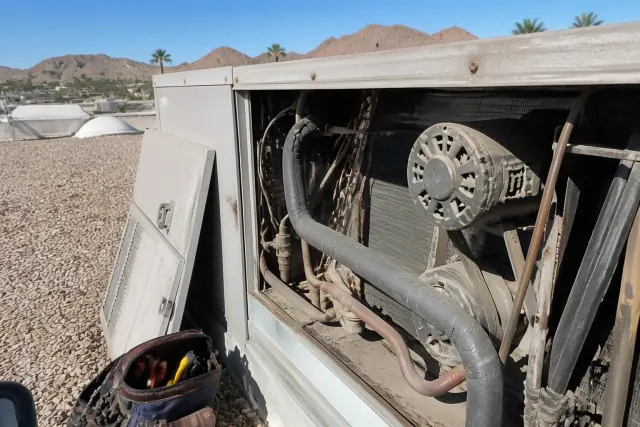
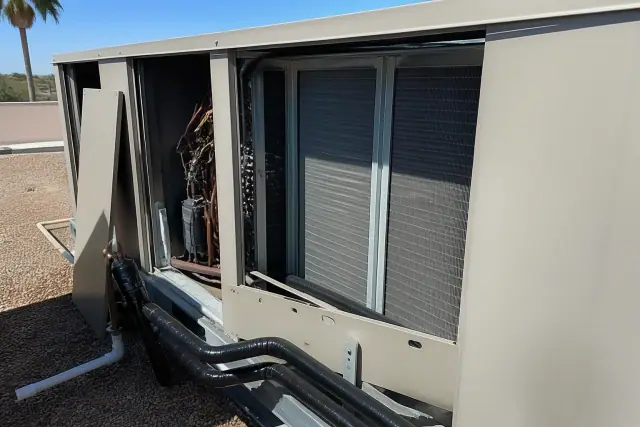
Rooftop commercial HVAC unit with copper lines and an open panel on a gravel roof in Phoenix, AZ.

We diagnose airflow restrictions, failed contactors, refrigerant leaks, and control faults on packaged units, split systems, and chillers. Digital manifold gauges with superheat and subcooling calculations help isolate the failure, while heating repairs address gas ignition, heat exchanger, and electric element faults during December through February.

Explore Service

Commercial HVAC Installation & Replacement

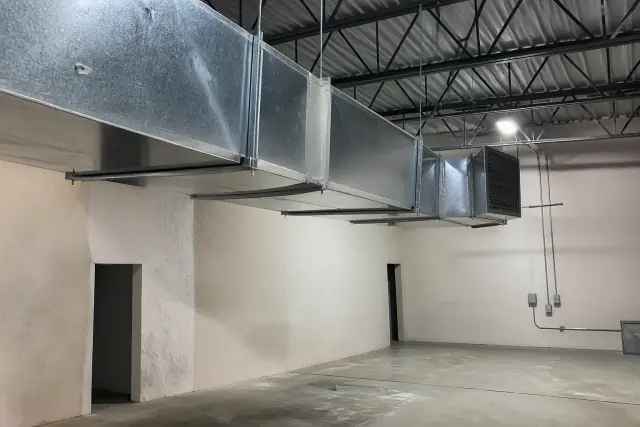
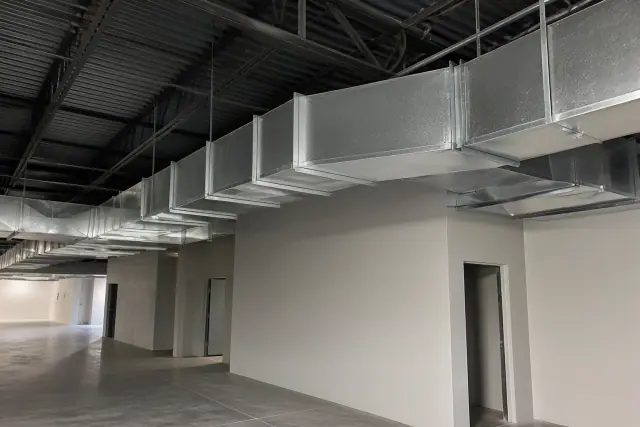
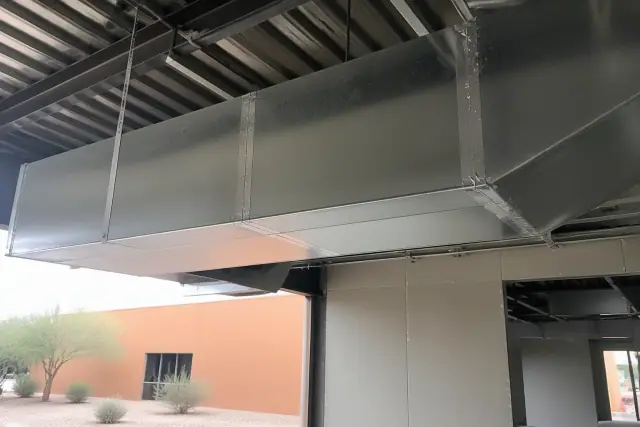
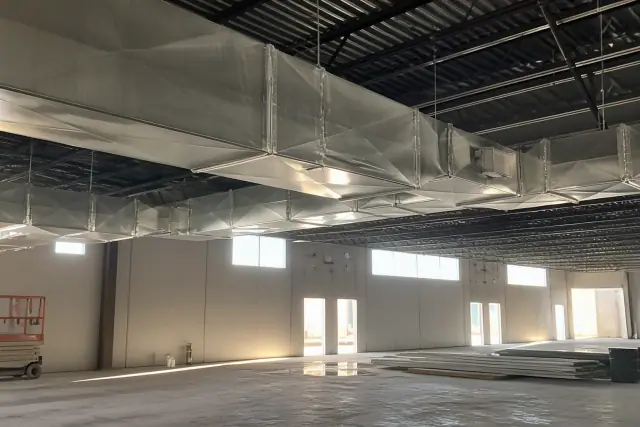
Galvanized steel ductwork installation suspended from an industrial ceiling at a job site in Phoenix, AZ.

Projects move from Manual N commercial load calculations through equipment selection, duct routing, startup documentation, airflow verification, and commissioning. Replacement and retrofit scopes account for curb dimensions, electrical service, gas-line sizing, and controls integration; supported efficiency upgrades can reduce annual energy consumption by 6 to 9 percent.

Explore Service

Commercial HVAC Maintenance

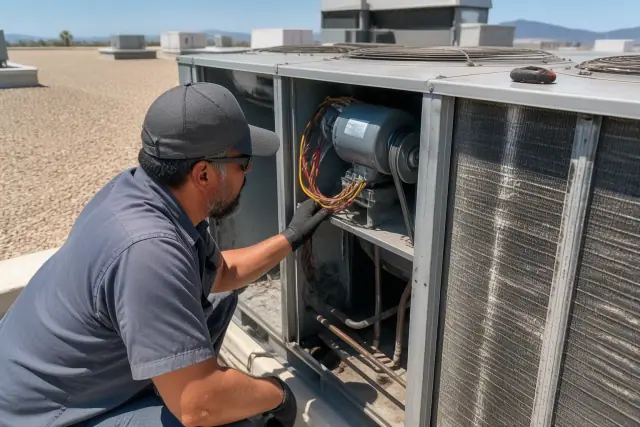
HVAC technician performing a seasonal maintenance tune-up on a rooftop unit in Phoenix, AZ.

Preventive programs cover coil cleaning, refrigerant charge verification, belt and bearing inspection, filter changes, and electrical connection torque checks. Well-maintained commercial systems can reach 20 to 25 years of service life, while neglected equipment may fail a decade sooner; maintenance contracts can bundle quarterly visits and discounted repair labor.

Explore Service

Rooftop Unit (RTU) Service & Replacement

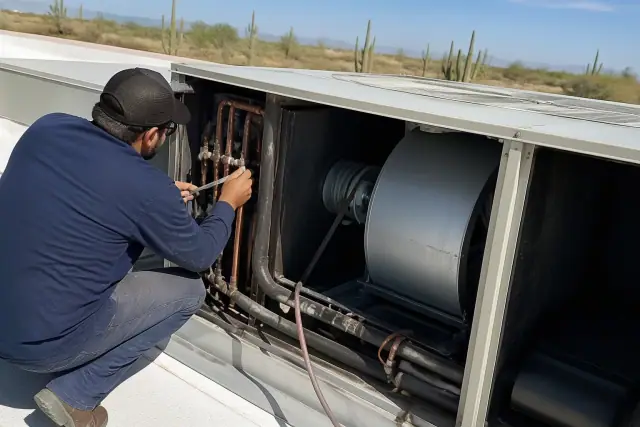
Technician performing a rooftop unit tune-up with exposed internal blower and copper piping in Phoenix, AZ.

Packaged rooftop units in Phoenix commonly run 10-15 years before compressor wear or monsoon-related corrosion makes replacement necessary. We service major manufacturers, match curbs and utilities for replacements, and coordinate cranes for rooftop swaps on multi-story buildings.

Commercial Refrigeration

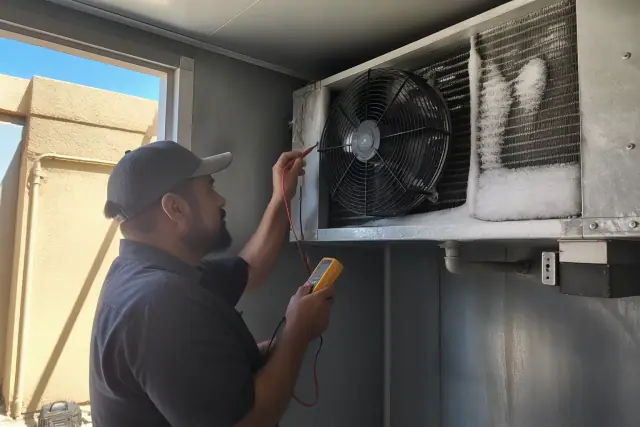
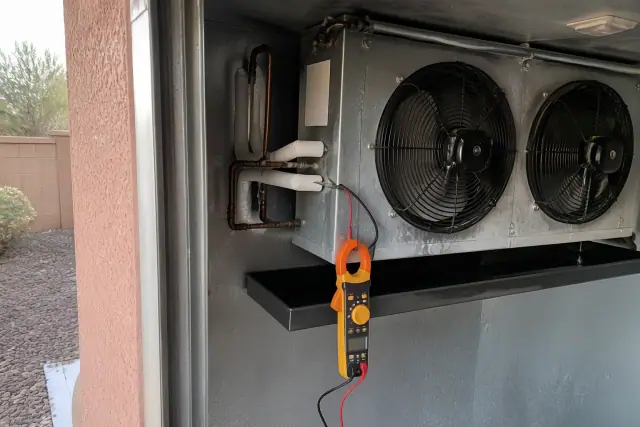
A technician repairing a walk-in cooler evaporator fan motor at a commercial jobsite in Phoenix, AZ.

We repair evaporator icing, door-gasket failures, compressor issues, and refrigerant leaks on walk-ins, freezers, reach-ins, and supermarket equipment. Installation support includes walk-ins and rack systems for restaurant buildouts and grocery renovations, with attention to food-safety temperatures and inspection timelines.

Commercial Ductwork

Galvanized steel ductwork installation suspended from an industrial ceiling in Phoenix, AZ.

Custom sheet-metal fabrication follows SMACNA construction standards, with ductwork sized and sealed to limit conditioned-air loss into ceiling plenums. Balancing dampers, diffuser placement, and static-pressure testing help correct hot and cold spots in retrofit buildings with outdated layouts.

Building Automation & HVAC Controls

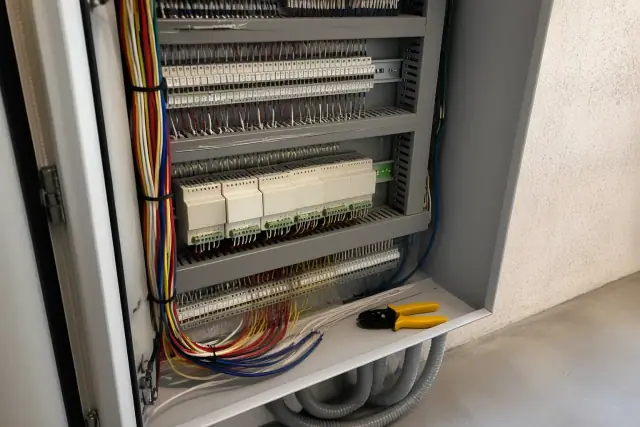
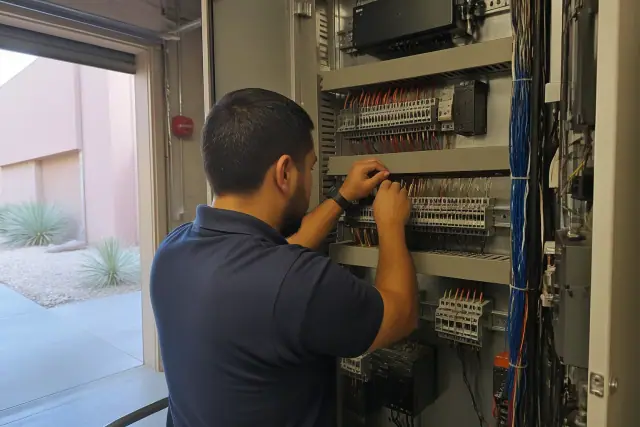
Technician wiring a building automation control cabinet with terminal blocks and wires in Phoenix, AZ.

Building automation platforms can schedule equipment by occupancy, adjust setpoints, and flag faults before they become larger failures. We install and program commercial thermostats, VAV controllers, economizer controls, trend logs, and alarm points while integrating new controls with existing building management systems.

Commercial Indoor Air Quality

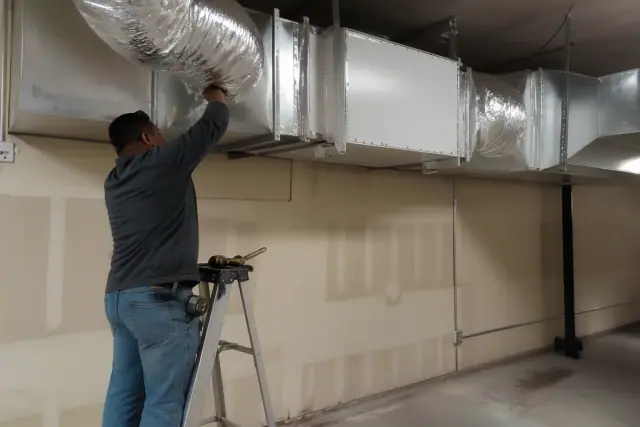
Installer securing a commercial air purification unit to ventilation ductwork in a Phoenix, AZ warehouse.

Commercial indoor air quality work addresses Valley dust, pollen, and periodic wildfire smoke with MERV-13 filtration and UV-C purification add-ons. We also service air-handler blowers, coils, and drain pans, and provide active humidity control for data centers and other specialty spaces.

VRF System Service

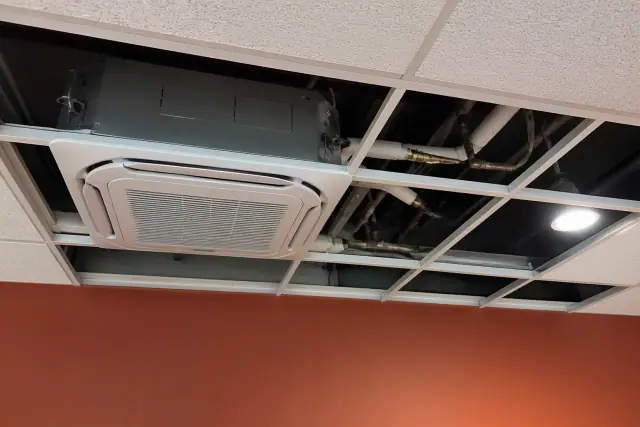
Technician installing a VRF indoor unit in a drop ceiling in Phoenix, AZ.

Variable refrigerant flow systems fit mixed-use buildings and office renovations where independent zoning matters. Installation, commissioning, and service account for refrigerant piping length limits and outdoor-unit placement under Phoenix high-ambient conditions.

Restaurant HVAC & Kitchen Ventilation

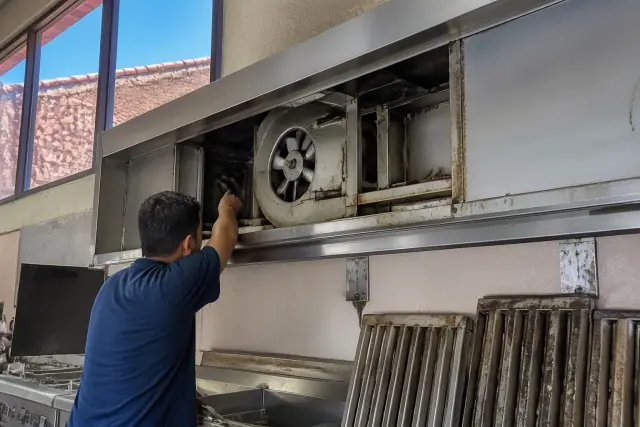
Contractor inspecting a commercial kitchen exhaust hood and motor in Phoenix, AZ.

Restaurant systems must manage heat from open-flame cooking and fryers while keeping exhaust and makeup air balanced. We size and install exhaust fans and ductwork to NFPA 96 requirements, match makeup-air capacity to exhaust CFM, and service hood fans and fire-suppression interlocks.

Specialized Commercial Systems

Specialized Commercial HVAC Solutions

Specialized commercial properties need mechanical work that connects cooling, ventilation, refrigeration, controls, and maintenance planning. These focused capabilities address the operational details behind food service, multi-zone buildings, indoor air quality, and long-term equipment performance.

Mechanic testing an evaporator coil fan motor inside a walk-in refrigerator in Phoenix, AZ.

Refrigeration & Food-Service Systems

Food-service and grocery equipment requires coordinated cooling, ventilation, and inspection planning to protect inventory and keep the facility operating.

  • Walk-in cooler and freezer repair
  • Reach-in and rack refrigeration installation
  • Condenser coil cleaning
  • Refrigerant leak checks
  • Health-department timeline coordination
Technician wiring a building automation control cabinet in a mechanical room in Phoenix, AZ.

Building Automation & Control Integration

Controls integration gives facility staff clearer scheduling, fault visibility, and performance data across existing and new commercial equipment.

  • Occupancy-based equipment scheduling
  • Automatic setpoint adjustment
  • VAV and economizer programming
  • Trend logs and alarm points
  • Existing building management system integration
Galvanized steel ductwork suspended from an industrial ceiling at a jobsite in Phoenix, AZ.

Ventilation & Indoor Air Quality

Ventilation and air-quality work combines fresh-air design, air distribution, filtration, and equipment care for offices, educational facilities, and specialty spaces.

  • ANSI/ASHRAE 62.1 outdoor-air design
  • SMACNA sheet-metal fabrication
  • Damper, diffuser, and static-pressure balancing
  • MERV-13 and UV-C air treatment
  • Humidity support for data centers and specialty spaces
Technician performing a seasonal tune-up on a rooftop HVAC unit in Phoenix, AZ.

Desert-Climate Maintenance & Retrofits

Planned maintenance and retrofit work accounts for Phoenix dust, haboob activity, long cooling seasons, aging rooftop equipment, and the phaseout of R-22 systems.

  • Pre-summer inspections in March and April
  • More frequent coil cleaning for Valley dust
  • Quarterly maintenance contract visits
  • Curb, electrical, and gas-line retrofit matching
  • Startup documentation and airflow verification
Commercial Systems, Local Conditions

Why Phoenix Businesses Choose Our Approach

Commercial mechanical work in the Sonoran Desert calls for accurate diagnostics, code-aware planning, and training on the systems found across Valley properties. Our approach connects those requirements from the first equipment assessment through permitting, commissioning, and ongoing service.

Desert-Climate Diagnostics

Technicians evaluate rooftop heat exposure, dust-driven coil fouling, extended duty cycles, airflow, electrical readings, and refrigerant performance. That evidence-based process helps distinguish a repairable fault from equipment that is approaching replacement.

Code-Compliant Project Planning

Installation planning incorporates City of Phoenix or surrounding-jurisdiction permits, locally adopted mechanical code, ventilation requirements, equipment access, and inspection scheduling. The scope is built around the property rather than a one-size-fits-all equipment choice.

Commercial Equipment & Controls Training

Our technician roster combines EPA Section 608 credentials with manufacturer training on rooftop units, VRF systems, and controls platforms. That commercial focus supports work on larger equipment, multiple zones, refrigeration, and integrated building controls.

Address Problems Before Peak Load

Commercial HVAC Problems We Resolve

Recurring comfort complaints, high runtime, refrigeration alarms, and ventilation issues often point to a measurable system condition rather than a single bad part. We assess the equipment, controls, airflow, and operating environment to identify the source of the problem.

Request HVAC Assessment

Rooftop Heat Stress

The Sonoran Desert can stress commercial equipment for nine months of the year. Near-continuous summer duty cycles accelerate compressor wear and push aging or undersized units toward failure during peak demand.

Restricted Airflow

Dirty condenser coils, loaded filters, worn belts, and poorly balanced ducts restrict airflow and force equipment to work harder. Valley dust and haboobs make coil condition and filter service especially important.

Refrigerant & Compressor Strain

Low refrigerant charge and dirty condenser coils can cause short-cycling and compressor strain. Leak diagnosis, EPA-compliant recovery, and charging to manufacturer specifications become especially important as R-22 equipment phases out.

Hot & Cold Spots

Outdated duct layouts, incorrect diffuser placement, damper settings, and static-pressure problems can leave some zones uncomfortable while others overcool. Air-distribution testing helps identify where the system is losing balance.

Refrigeration Downtime

Evaporator icing, damaged door gaskets, compressor faults, and small refrigerant leaks can threaten food-safety temperatures and product. Commercial refrigeration diagnostics prioritize the conditions that put inventory at risk.

Kitchen Pressure Imbalance

Exhaust systems without adequate makeup air can back-draft and pull conditioned air out of dining areas. Matching makeup-air capacity to hood exhaust helps stabilize kitchen pressure and capture grease-laden vapor.

How It Works

Our Commercial HVAC Service Process

Each service path is shaped by the equipment, building use, access, and urgency, but the work follows a consistent sequence. We document the condition, measure performance, define the scope, coordinate required logistics, complete the work, and verify operation.

01.

Assess the Site & Equipment

We review occupancy, operating hours, roof access, equipment age, service history, visible condition, and the problem reported by facility staff.

02.

Measure Load & Performance

Diagnostics may include Manual N load calculations, airflow and static-pressure testing, electrical readings, refrigerant gauges, and superheat or subcooling calculations.

03.

Build the Scope & Proposal

Findings are translated into a repair, replacement, maintenance, or retrofit scope with an itemized proposal covering equipment, labor, permitting, and relevant coordination.

04.

Coordinate Permits & Logistics

For applicable projects, we coordinate local permit submission, inspection scheduling, crane access, equipment delivery, and restaurant or health-department timelines.

05.

Complete the Mechanical Work

Technicians perform the approved repair or installation, including refrigerant recovery, equipment setting, ductwork, electrical connections, piping, ventilation, or controls work within the defined scope.

06.

Commission & Document

We verify startup, airflow, controls sequences, setpoints, trend or alarm functions when applicable, and provide the documentation needed for operation and inspection.

Commercial HVAC Coverage Across Phoenix

Phoenix spans 517.9 square miles within a metro of 5.19 million residents, so commercial building stock, roof access, and permitting jurisdictions vary across the coverage area. Phoenix Commercial HVAC serves the city, greater Maricopa County, and the named Valley communities and commercial districts below.

  • Phoenix
  • Downtown Phoenix
  • Central Phoenix
  • Midtown
  • Camelback Corridor
  • Arcadia
  • Sky Harbor-adjacent industrial parks
  • Deer Valley warehouses
  • Ahwatukee retail centers
  • Scottsdale
  • Tempe
  • Mesa
  • Chandler
  • Glendale
  • Peoria
  • Greater Maricopa County
  • Salt River Valley
  • Phoenix metro area
  • Sun Corridor
Installed galvanized steel HVAC ductwork hanging from the ceiling of a warehouse in Phoenix, AZ.

Honest Feedback from Phoenix Commercial Clients

Commercial Client Feedback
★ ★ ★ ★ ★

Our Midtown office RTU failed during a hot afternoon. The technician traced it to a failed contactor, explained the repair clearly, and had the space cooling again without pushing an unnecessary replacement.

MT
Marcus T.Facility Manager - Midtown Phoenix
★ ★ ★ ★ ★

The kitchen had been pulling conditioned air out of our dining room whenever the hood ran. They checked the exhaust and makeup air together, corrected the balance, and walked us through what changed.

PS
Priya S.Restaurant Owner - Downtown Phoenix
★ ★ ★ ★ ★

Managing several Scottsdale suites is easier with one clear quarterly maintenance plan. The team documents coil condition, filters, belts, and refrigerant readings so I can plan repairs before tenants feel a problem.

DK
Daniel K.Property Manager - Scottsdale
★ ★ ★ ★ ★

Our Deer Valley warehouse had stubborn hot and cold zones after an equipment change. They measured static pressure, adjusted the dampers, and gave us a practical explanation of the old duct layout.

ER
Elena R.Operations Director - Deer Valley
Plan Your Commercial Service

Schedule a Commercial
HVAC
Consultation

Tell us what your building, equipment, or facility team is experiencing. We can discuss repair diagnostics, replacement planning, maintenance contracts, refrigeration, ductwork, controls, indoor air quality, or restaurant ventilation and outline the next appropriate service step.

Commercial HVAC Help

Commercial HVAC Questions, Answered

These answers cover common questions from Phoenix building owners, facility managers, restaurant operators, and property managers. Call if you need to discuss a specific system condition, service scope, or replacement decision.

Call Our Experts

Arizona does not have one statewide rule requiring air conditioning in every property type, but Arizona Revised Statutes treat functioning cooling in rental housing as part of habitability, with municipal enforcement also involved. Commercial buildings must meet the International Mechanical Code provisions adopted locally, and new installations or major replacements generally require permits and inspections. We coordinate permit submission and inspection scheduling for installation projects.

Commercial HVAC includes the design, installation, repair, and maintenance of heating, cooling, ventilation, refrigeration, and controls in non-residential buildings. The work can cover rooftop packaged units, split systems, VRF equipment, chillers, ductwork, building automation, and kitchen exhaust. It also includes load calculations, equipment sizing, refrigerant charging, electrical troubleshooting, and controls programming.

The $5,000 rule is a repair-versus-replacement guideline: multiply equipment age by the estimated repair cost, and a result above roughly $5,000 can point toward replacement. It is not a strict formula. Remaining warranty coverage, refrigerant type, equipment condition, and possible efficiency gains should also be considered.

Cost varies with building size, equipment type, access, ductwork condition, electrical upgrades, controls integration, and permitting. The source scope ranges from a few thousand dollars for a small packaged-unit replacement to well into six figures for a large mechanical retrofit. We provide itemized proposals so owners can see the included equipment, labor, and permit costs.

Residential systems generally serve one household with smaller split or packaged equipment. Commercial HVAC involves larger capacities, multiple zones, higher airflow, more complex controls, and added ventilation or life-safety requirements for offices, restaurants, warehouses, and multi-tenant buildings. It requires training focused on commercial-scale equipment and controls.

Published ranges vary by equipment type: heat pumps commonly last 10-15 years, air handlers 15-20 years, and chillers 15-25 years under normal conditions. Phoenix rooftop heat and the extended cooling season can pull service life toward the shorter end without consistent maintenance. Coil cleaning, refrigerant checks, and maintenance history help support replacement planning before a forced outage.

Yes. Phoenix Commercial HVAC provides emergency commercial HVAC repair and 24/7 response for building failures, refrigeration outages, and kitchen ventilation shutdowns that cannot wait for a normal service window. Same-day HVAC service is also part of the service scope described for urgent needs.

Preventive service can include coil cleaning, refrigerant charge verification, belt and bearing inspection, filter changes, and electrical connection torque checks. Maintenance contracts may bundle quarterly visits, priority emergency response, and discounted repair labor. The exact scope should match the equipment and operating demands at the property.

Pre-summer inspections are scheduled in March and April, before peak cooling load arrives. The visit can check refrigerant levels, condenser fan operation, economizer function, filters, coils, belts, and electrical connections. Earlier inspection gives facility teams time to address findings before the hottest months.

Diagnostics cover airflow restrictions, failed contactors, refrigerant leaks, control faults, compressor problems, gas-furnace ignition issues, heat-exchanger cracks, and electric heating-element faults. We work on packaged rooftop units, split systems, chillers, heat pumps, and air handlers. Measurements are used to identify the failure instead of guessing at parts.

We repair and maintain walk-in coolers, freezers, reach-ins, rack refrigeration systems, and supermarket refrigeration equipment. Common work includes evaporator-icing diagnosis, door-gasket repair, condenser-coil cleaning, compressor service, and refrigerant-leak checks. Installation support is available for restaurant buildouts and grocery renovations.

They can when hot and cold spots are tied to duct sizing, leakage, diffuser placement, damper settings, or static pressure. We fabricate ductwork to SMACNA construction standards and use air-distribution testing to identify imbalance. Ventilation design also accounts for occupancy loads and ANSI/ASHRAE 62.1 fresh-air requirements.

Building automation can schedule equipment around occupancy, adjust setpoints, and surface faults before they cause a larger failure. Controls work may include commercial thermostats, VAV controllers, economizers, trend logs, alarm points, and integration with an existing building management system. Programming follows the required sequence of operation.

Kitchen exhaust removes heat and grease-laden vapor, while makeup air replaces the air being discharged. If makeup air is inadequate, the kitchen can back-draft and pull conditioned air from dining areas. We size makeup-air units to match exhaust CFM and service hood fans, ductwork, and fire-suppression interlocks.