Proudly serving Phoenix, Mesa, Scottsdale, Tempe, Chandler, Glendale & surrounding areasCall or Text 24/7: 480-300-4493
Aerial drone view of a residential neighborhood with Saguaro cacti and stucco homes in Phoenix, AZ.

Commercial HVAC Repairs and System Maintenance in Scottsdale, AZ

Phoenix Commercial HVAC provides commercial HVAC repair, installation and replacement, and preventive maintenance for Scottsdale businesses. We service rooftop units, package units, split systems, and VRF equipment in offices, restaurants, medical facilities, retail stores, and warehouses. Our commercial work also includes refrigeration, ductwork, building automation and controls, indoor air quality, and kitchen ventilation. Each recommendation is based on the property's use, equipment configuration, and cooling load.

Flat commercial roofs in Scottsdale routinely climb past 160°F in summer, putting sustained thermal load on compressors, condenser coils, and control boards. Monsoon season, typically June through September, brings blowing dust and sudden humidity spikes that can clog filters and stress coils within weeks of cleaning. Intense UV exposure also degrades cabinet insulation, wiring insulation, gaskets, and rooftop curb seals. Our technicians identify the actual failure point, document readings, and build the repair or replacement scope around local operating conditions.

Crews serve Old Town Scottsdale, the Airpark district, Kierland, DC Ranch, McCormick Ranch, the Shea corridor, Talking Stick, and supported communities across the Valley. Commercial calls are prioritized by business impact when cooling or refrigeration failures threaten operations.

★ ★ ★ ★ ★4.9/5.0 Customer Rating - 31 Years of HVAC Experience - Thousands of Commercial Systems Serviced - Licensed, Bonded & Insured - Serving Commercial & Industrial Properties
Commercial HVAC Services

Commercial HVAC Services in Scottsdale, AZ

Scottsdale properties need different mechanical strategies based on building age, occupancy, operating schedule, and rooftop configuration. The services below cover repair, replacement, maintenance, airflow, controls, refrigeration, and ventilation needs across the city's commercial property types. For multi-location operators, the same documented service process is available at supported properties in Tempe, AZ .

Commercial HVAC Repair

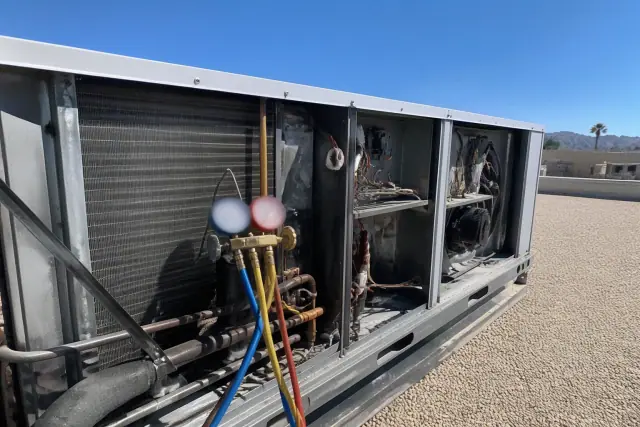
Manifold gauges connected to an open rooftop HVAC unit on a gravel roof in Scottsdale, AZ.

When a package unit trips on a 112°F afternoon, we test for compressor failures, refrigerant leaks, failed capacitors and contactors, condenser fan problems, iced evaporator coils, and control board faults. Technicians work on package units, split systems, and VRF equipment, carry common commercial parts, and document readings so facility teams know what failed and why.

Explore Service

Commercial HVAC Installation & Replacement

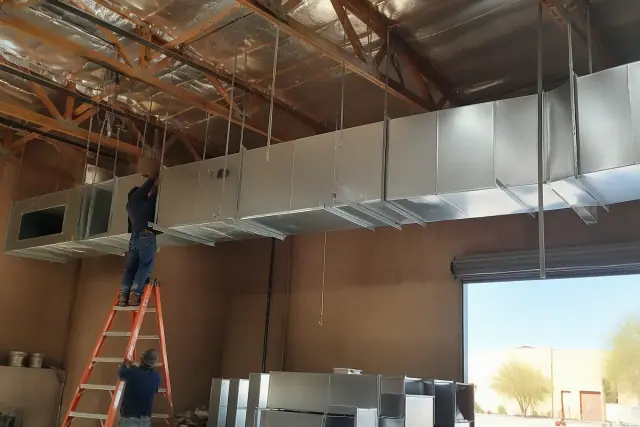
Sheet metal workers installing galvanized steel ductwork on a warehouse ceiling in Scottsdale, AZ.

New construction and tenant improvements are sized with Manual N and ASHRAE load calculations, then coordinated with the general contractor and City of Scottsdale Building Development Department. Replacement work can include crane-set rooftop swaps, curb adapter fabrication, electrical and gas reconnection, duct capacity evaluation, refrigerant charge verification, static pressure testing, and startup commissioning.

Explore Service

Commercial HVAC Maintenance

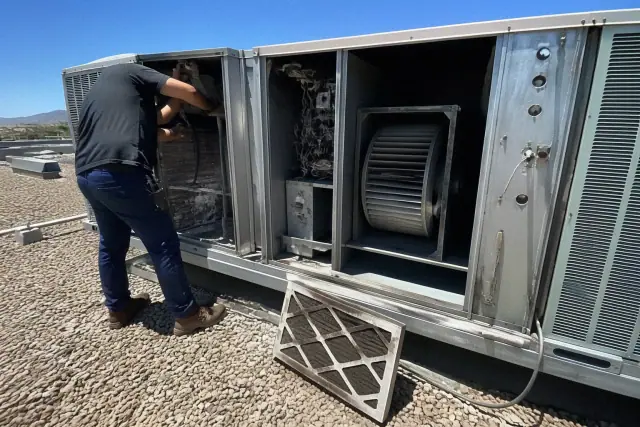
HVAC technician performing a rooftop unit tune-up on a gravel roof in Scottsdale, AZ.

Preventive visits include coil cleaning, refrigerant charge verification, electrical connection torque checks, belt and bearing inspection, and condensate drain clearing. Published guidance indicates that maintenance can be the difference between a rooftop unit reaching year 20 and failing at year 10; Valley programs typically run between $0.15 and $0.30 per square foot annually.

Explore Service

Rooftop Unit (RTU) Service & Replacement

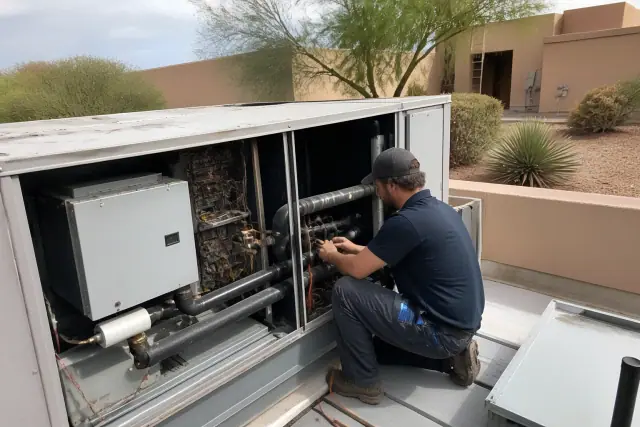
HVAC technician performing a seasonal tune-up on a commercial rooftop unit in Scottsdale, AZ.

RTU service addresses the UV exposure and desert dust that can degrade cabinet seals, gaskets, and condenser performance within a single cooling season. On flat commercial roofs in the Airpark and Scottsdale Road corridor, standard checks include economizer operation, belt tension, refrigerant charge, coil condition, wiring, and rooftop seals.

Commercial Refrigeration

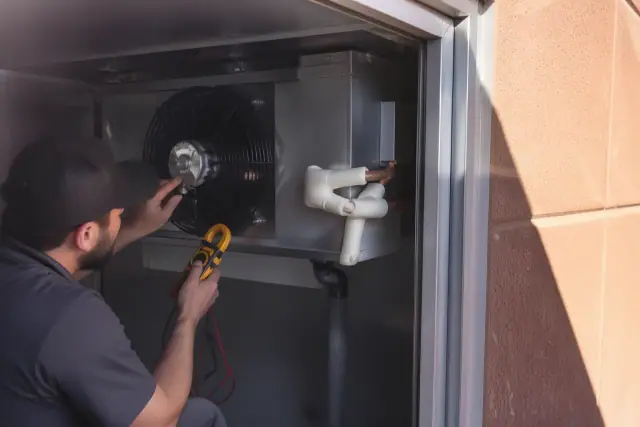
Mechanic testing a walk-in cooler evaporator fan motor during a repair in Scottsdale, AZ.

Commercial refrigeration service covers walk-in coolers, reach-in freezers, and display cases used by restaurants and grocery operations. Work includes compressor and evaporator coil repair, defrost timer and control diagnosis, and leak detection with electronic sniffers and UV dye, with refrigerant type and charge tracked for each serviced system.

Commercial Ductwork

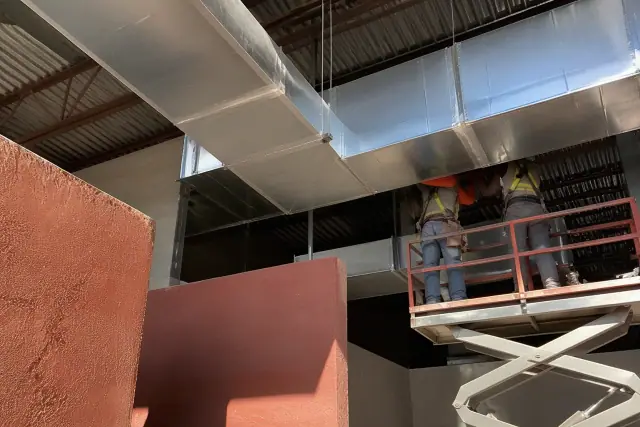
Sheet metal workers installing galvanized steel rectangular ductwork in a commercial building in Scottsdale, AZ.

We fabricate and install sheet metal ductwork to SMACNA standards, seal joints, and test static pressure and airflow to confirm proper CFM at each zone. In older Scottsdale retail buildings, original undersized or leaking ducts can prevent a newer RTU from keeping the occupied space comfortable.

Building Automation & HVAC Controls

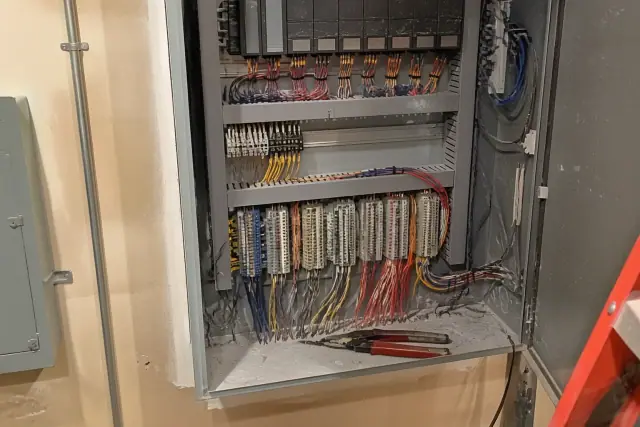
Technician wiring a building automation control cabinet with color-coded wires at a commercial jobsite in Scottsdale, AZ.

DDC controls, programmable thermostats, and building management system integration give facility managers one place to monitor rooftop units, VRF systems, and zone dampers. Scheduling and setback programming can reduce unnecessary cooling in offices and multi-tenant properties that still rely on manual or outdated pneumatic controls.

Commercial Indoor Air Quality

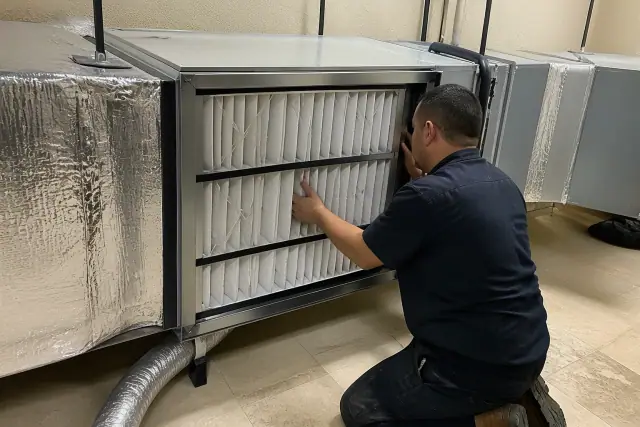
Technician installing a commercial air purification unit into ductwork in Scottsdale, AZ.

Indoor air quality options include high-MERV filtration, UV germicidal lighting, and ventilation upgrades designed around ASHRAE 62.1 outdoor-air requirements. These measures help medical facilities and offices manage allergens and airborne particulate carried into building envelopes by Scottsdale's dry, dusty conditions.

VRF System Service

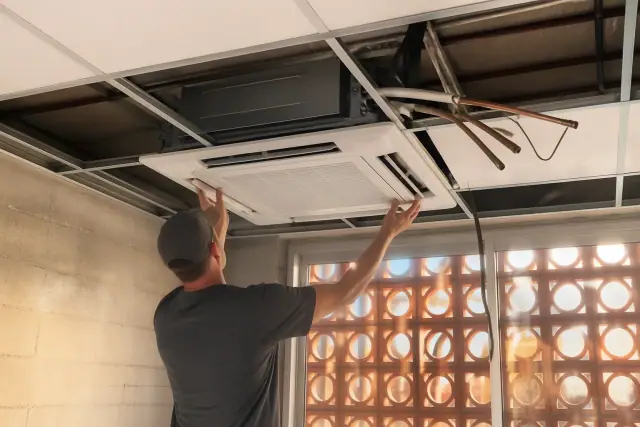
Technician installing a VRF ceiling unit in a Scottsdale, AZ commercial space with exposed refrigerant piping.

VRF diagnostics use specialized tools and manufacturer-specific training to trace faults across refrigerant piping networks, branch controllers, and outdoor condensing unit communications. Service planning also accounts for refrigerant piping length and elevation limits in Scottsdale's newer mixed-use, multi-tenant, and mid-rise buildings.

Restaurant HVAC & Kitchen Ventilation

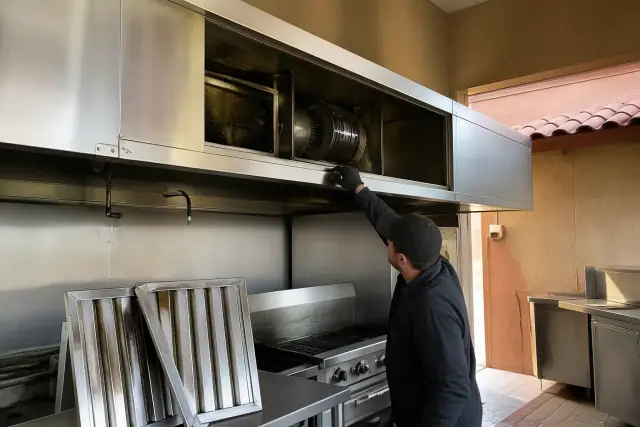
Technician inspecting commercial kitchen exhaust hood components in a Scottsdale, AZ restaurant.

Restaurant service covers makeup air units, exhaust hood fans, comfort cooling, and kitchen HVAC equipment exposed to constant heat and grease-laden air. Ventilation work is planned around NFPA 96 requirements and the inspection roles of the Scottsdale Fire Department and Maricopa County Environmental Services.

Service Selection

Choose the Right HVAC Approach for Your Property

The right scope depends on more than the failed component. Building use, cooling load, equipment age, duct capacity, controls, roof access, code requirements, and the cost of downtime all shape whether repair, modification, maintenance, or replacement is the practical choice.

Occupancy-Based Load Planning

A medical office needs different humidity, filtration, and scheduling controls than a warehouse, while restaurant and retail loads change with kitchens, customers, and operating hours. Manual N and ASHRAE load calculations keep new equipment selection tied to actual occupancy instead of a generic specification.

Equipment Age and Repair History

Once a commercial unit is past 12-15 years old and repair costs are climbing, replacement may make more financial sense than another major repair. Service records, compressor condition, refrigerant issues, duct compatibility, and the remaining condition of the cabinet and controls all belong in that decision.

Permits and Code Requirements

System replacement, ductwork modification, and new equipment installation require permits under the International Mechanical Code adopted by the City of Scottsdale Building Development Department. Planning for submittals and inspections before work begins helps prevent avoidable project delays.

Rooftop and Duct Conditions

A crane-set replacement may need a fabricated curb adapter when the new footprint does not match the old unit. Existing sheet metal, static pressure, zone airflow, electrical service, gas connections, UV-damaged seals, and safe roof access must be evaluated as part of the complete scope.

Air Quality and Refrigeration Needs

Occupied medical and office environments may prioritize filtration, outdoor air, and humidity control, while restaurants and grocery operations must protect refrigerated inventory. Those operational needs determine whether the scope centers on comfort cooling, high-MERV filtration, ventilation, leak detection, or cooler and freezer repairs.

Controls and Zoning

Multi-tenant offices and mixed-use properties can benefit from DDC controls, zone dampers, programmable schedules, and building management system integration. VRF properties also require evaluation of branch controllers, communication faults, and refrigerant piping limits before the repair strategy is set.

Scottsdale HVAC Challenges

Common Commercial HVAC Problems in Scottsdale

Extreme heat, monsoon dust, intense UV exposure, aging ductwork, and varied occupancy loads create recurring failure patterns across Scottsdale commercial properties. Recognizing the pattern behind the symptom helps direct testing toward the compressor, airflow, refrigerant circuit, electrical components, controls, or building envelope.

Request HVAC Diagnosis

Compressor Heat Stress

Scottsdale summer air temperatures routinely push past 110°F, and rooftop surfaces can run 40-50 degrees hotter than the surrounding air. That sustained load makes compressors work harder and accelerates failures in components that would face less stress in a milder climate.

Dust-Clogged Coils and Filters

Desert landscaping and monsoon winds push particulate into condenser coils, filters, and occupied spaces. Restricted heat transfer and airflow can raise operating strain, so Scottsdale maintenance intervals need to reflect local dust loading rather than assumptions from cooler, wetter markets.

UV-Damaged Seals and Wiring

Persistent rooftop UV exposure can break down cabinet insulation, wiring insulation, curb seals, and gaskets faster than national service assumptions account for. Cracked seals allow heat and contaminants into the cabinet, while brittle wiring can contribute to intermittent electrical faults.

Refrigerant and Electrical Failures

Slow refrigerant leaks, low charge, failed condenser fan motors, capacitors, contactors, and control boards can all cause weak cooling or a complete shutdown. Electrical readings, charge checks, recovery practices, and targeted leak detection separate the root cause from similar-looking symptoms.

Leaking or Undersized Ductwork

Original ductwork in older strip malls and retail buildings may leak or lack the capacity for current occupancy loads and newer equipment. Static pressure and airflow testing can show why conditioned air is not reaching a zone even when the rooftop unit itself is operating.

Control and Zoning Faults

Outdated pneumatic controls, failed zone dampers, poor schedules, and VRF communication faults can create hot and cold areas or force equipment to run when spaces are unoccupied. DDC diagnostics and functional control checks reveal whether the issue is mechanical, programming-related, or within the communication network.

Why Choose Us

Why Scottsdale Businesses Choose Phoenix Commercial HVAC

Commercial service decisions affect tenants, staff, customers, inventory, energy use, and compliance. Our approach combines Scottsdale-specific equipment knowledge with standards-based calculations, documented diagnostics, written scopes, permit coordination, commissioning, and unit-level service histories.

Scottsdale Desert Experience

Local familiarity helps distinguish Airpark rooftop conditions from older south Scottsdale ductwork or the operating needs of retail near Fashion Square, restaurants in Old Town, and hospitality properties near TPC Scottsdale. That context guides inspection priorities and avoids one-size-fits-all equipment recommendations.

Standards-Based Technical Work

EPA Section 608-certified technicians handle refrigerants under the Clean Air Act using recovery equipment that meets current EPA guidelines. The team also applies ACCA-recommended maintenance practices, ASHRAE-based load calculations, and NATE-certified technical knowledge to commercial installation and repair work.

Documented Diagnostics

We pull electrical readings, check refrigerant charge and airflow, identify the root cause, and provide a written scope and cost estimate before repair or replacement begins. After service, documented readings and equipment history give property managers a clearer record for recurring issues and future capital planning.

Simple Process

Our Commercial HVAC Service Process in Scottsdale

The process moves from equipment and operating-context review to measured diagnostics, a written scope, coordinated work, and final verification. Installation and replacement projects add load calculations, permit handling, contractor coordination, and commissioning before closeout.

01.

Inspect the Equipment

The diagnostic visit starts with the unit, roof or mechanical space, duct connections, controls, filters, coils, and the operating conditions reported by the facility team.

02.

Measure and Diagnose

Technicians pull electrical readings, verify refrigerant charge, test airflow and static pressure where relevant, and trace the failure to its root cause instead of treating only the symptom.

03.

Review the Written Scope

Before work begins, the customer receives a written scope and cost estimate that explains the recommended repair, modification, maintenance, or replacement path.

04.

Coordinate the Project

For installations and replacements, we complete load calculations, pull required permits, and coordinate access and timing with property management or the general contractor.

05.

Complete the Work

The approved repair or project is completed with the required parts, duct, controls, refrigerant recovery equipment, rooftop logistics, and trade coordination for the defined scope.

06.

Commission and Document

Startup checks verify refrigerant charge, airflow, and control operation before closeout. We then log the unit's service history to support recurring-fault diagnosis and future replacement budgeting.

Property Applications

Commercial HVAC Priorities Across Scottsdale Properties

Case Study 1: Restaurants and grocery operations: Coordinate comfort cooling, makeup air, exhaust hood fans, walk-in coolers, freezers, and display cases around kitchen heat and inventory risk.

Case Study 2: Medical and office spaces: Balance humidity, high-MERV filtration, ventilation, zone controls, and occupied schedules while limiting disruption to patients, tenants, and staff.

Case Study 3: Retail, warehouse, and mixed-use properties: Match rooftop or VRF capacity, duct airflow, controls, and operating schedules to actual occupancy and use rather than a one-size-fits-all specification.

Plan Scottsdale HVAC Service

Schedule a Commercial HVAC
Consultation

Request an assessment for a commercial repair, maintenance concern, replacement plan, refrigeration issue, duct problem, or controls project in Scottsdale. We will review the property context, inspect the equipment, and provide a written scope and cost estimate before approved work begins.

Commercial HVAC Help

Commercial HVAC FAQs for Scottsdale, AZ

These answers cover common questions from Scottsdale facility managers and business owners about repair response, maintenance, replacements, code coordination, refrigeration, airflow, controls, indoor air quality, and service coverage.

Call Our HVAC Team

Services include commercial HVAC repair, installation and replacement, preventive maintenance, RTU service, refrigeration, ductwork, building automation and controls, indoor air quality, VRF service, and restaurant HVAC and kitchen ventilation. The team works on equipment serving offices, restaurants, medical facilities, retail stores, warehouses, and multi-tenant properties.

Most Scottsdale commercial repair calls receive same-day attention, particularly during peak cooling season, and 24/7 support covers after-hours and weekend failures. Dispatch prioritizes total system failures and situations that threaten operations or refrigerated inventory.

Cost varies with square footage, equipment count, age, and system type. Published data places typical annual maintenance spending for mid-size commercial buildings between $18,000 and $65,000 and says a structured preventive approach generally runs 20-40% less over time than reactive break-fix service.

Replacement becomes worth evaluating when an older unit needs increasingly expensive repairs, has recurring refrigerant or compressor problems, or no longer matches the building's load. The decision should also account for existing duct capacity, electrical and gas connections, curb dimensions, controls, and the cost of business downtime.

Visits include coil cleaning, refrigerant charge verification, electrical connection torque checks, belt and bearing inspection, and condensate drain clearing. Scottsdale rooftop service also checks economizers, UV degradation on gaskets and wiring, cabinet seals, and dust loading.

Extreme roof temperatures increase compressor and condenser strain, while desert dust restricts coil airflow and monsoon humidity changes operating conditions. Constant UV exposure also ages cabinet insulation, wiring insulation, gaskets, and curb seals faster than in milder climates.

The City of Scottsdale Building Development Department requires permits for system replacement, ductwork modification, and new equipment installation under the adopted International Mechanical Code. Arizona commercial HVAC contractors must hold an active Arizona Registrar of Contractors license, and refrigerant handling is governed by EPA Section 608 under the Clean Air Act.

Kitchen ventilation must address comfort cooling, makeup air, exhaust hood fans, grease-laden air, and fire-suppression coordination. The source identifies NFPA 96 requirements along with inspection involvement from the Scottsdale Fire Department and Maricopa County Environmental Services.

Yes. Commercial refrigeration work covers walk-in coolers, reach-in freezers, and display cases, including compressor replacement, evaporator coil repair, defrost timer and control failures, and electronic or UV-dye leak detection. Refrigerant type and charge are tracked, and relevant handling and disposal practices account for Maricopa County Air Quality Department requirements.

DDC controls and building management system integration let facility managers monitor rooftop units, VRF systems, and zone dampers from one dashboard. Programmable schedules and setbacks reduce unnecessary runtime in buildings that previously relied on manual or outdated pneumatic controls.

Static pressure and airflow testing show whether each zone receives proper CFM and whether leakage or undersized ducts are limiting capacity. When modification is needed, sheet metal ductwork is fabricated and installed to SMACNA standards and joints are sealed to reduce leakage.

Available options include high-MERV filtration, UV germicidal lighting, and ventilation upgrades designed around ASHRAE 62.1 outdoor-air requirements. The appropriate combination depends on occupancy, particulate load, ventilation needs, and whether the property is an office, medical facility, restaurant, or another commercial use.

VRF systems use interconnected refrigerant piping, branch controllers, outdoor condensing units, and communication networks that require specialized diagnostic tools and manufacturer-specific training. Troubleshooting must also account for piping length and elevation limits in multi-tenant and mid-rise properties.

Scottsdale coverage includes Old Town, the Airpark district, Kierland, DC Ranch, McCormick Ranch, the Shea Boulevard corridor, Talking Stick, Fashion Square, and areas near Hayden Road and the Loop 101 corridor. The supported Valley service area also includes Paradise Valley, Fountain Hills, Cave Creek, Carefree, greater Phoenix, and Maricopa County.

Higher-efficiency equipment can cut energy consumption by 20-50% when it is correctly selected for the building and integrated with compatible ductwork and controls. The Department of Energy also estimates that proper commercial HVAC operation and maintenance can extend equipment life while reducing long-term operating costs.