Proudly serving Phoenix, Mesa, Scottsdale, Tempe, Chandler, Glendale & surrounding areasCall or Text 24/7: 480-300-4493
Aerial drone view of a residential neighborhood with Saguaro cacti and stucco homes in Phoenix, AZ.

Commercial HVAC Repair and Preventative Maintenance in Gilbert, AZ

Phoenix Commercial HVAC serves Gilbert businesses with commercial HVAC repair, installation and replacement, and preventative maintenance. Our commercial scope also includes rooftop units, refrigeration, ductwork, building controls, indoor air quality, VRF systems, and restaurant ventilation. We work across retail centers, medical offices, restaurants, office parks, and light industrial buildings throughout Gilbert.

Black membrane roofing in Gilbert can exceed 160 degrees during summer, placing sustained thermal stress on package units, compressors, and refrigerant lines. A failed rooftop unit or warm walk-in can interrupt operations and put revenue, occupants, or stored products at risk. Licensed commercial HVAC contractors use diagnostics such as gauges and amp-draw readings to identify the fault before recommending repair, replacement, or a maintenance response.

Service coverage reaches the Heritage District, Agritopia, SanTan Village, Val Vista, Power Road, Higley, Williams Field Road, and commercial properties near the Loop 202 corridor.

★ ★ ★ ★ ★4.9/5.0 Customer Rating - 31 Years of HVAC Experience - Thousands of Commercial Systems Serviced - Licensed, Bonded & Insured - Serving Commercial & Industrial Properties
Commercial HVAC Services

Commercial Climate-Control Services in Gilbert, AZ

Gilbert is the largest incorporated town in the United States, with a population above 287,000 and the fourth-highest population of any Arizona municipality. Its expanding retail, restaurant, medical, office, and light-industrial space calls for service matched to each building and system type. The same dispatch network also covers Chandler, Mesa, Queen Creek, Tempe, Maricopa County, and businesses needing commercial HVAC support in Peoria, AZ .

Commercial HVAC Repair

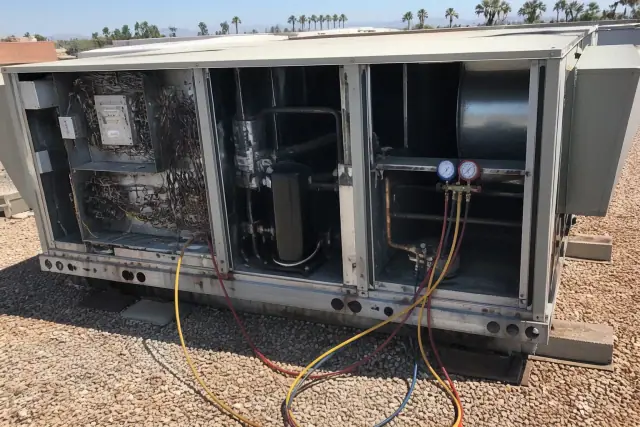
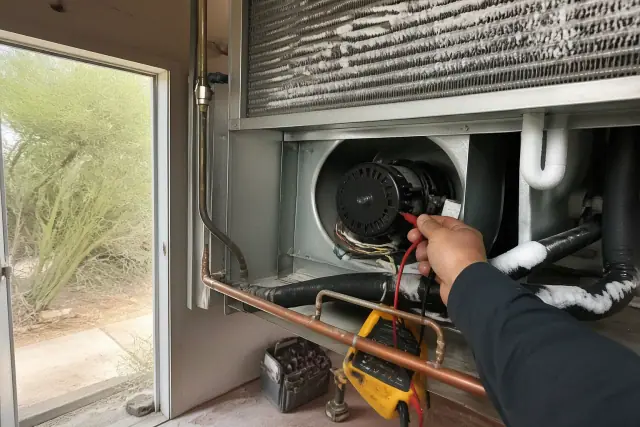
Commercial HVAC rooftop unit with service gauges and open panels during a tune-up in Gilbert, AZ.

Technicians diagnose split systems, package units, and rooftop equipment using gauges, amp-draw readings, and component testing. National average HVAC repair costs range from $243 to $1,567 depending on the failure, while long desert run times can increase compressor and capacitor wear.

Explore Service

Commercial HVAC Installation & Replacement

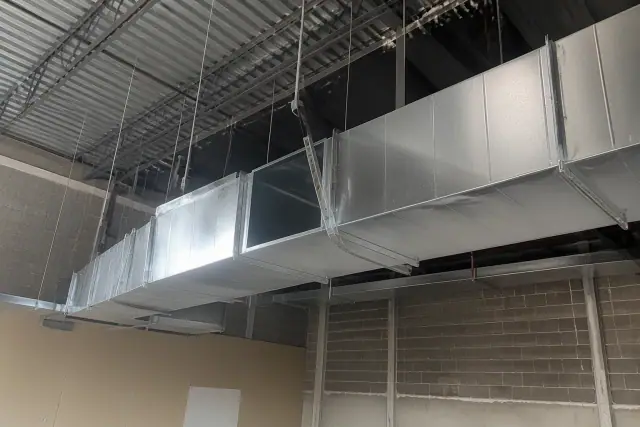
Sheet metal workers installing galvanized steel rectangular ductwork from an industrial ceiling in Gilbert, AZ.

New construction and tenant improvements begin with Manual N commercial load calculations, equipment selection, and mechanical-permit coordination. Replacement planning can include high-efficiency, SEER2-rated options and payback review when an aging system is no longer economical to repair.

Explore Service

Commercial HVAC Maintenance

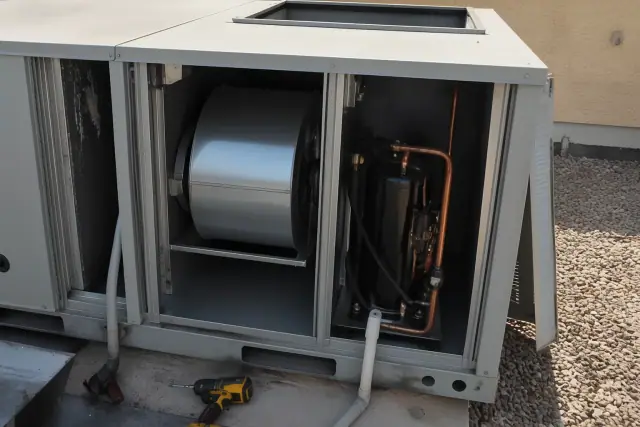
Open commercial HVAC rooftop unit with tools resting on the frame during a maintenance tune-up in Gilbert, AZ.

Quarterly maintenance for Arizona conditions includes coil cleaning, belt and bearing checks, refrigerant-charge verification, and electrical tightening. Preventative maintenance averages $0.15 to $0.30 per square foot annually and is consistently 20 to 40% cheaper than reactive repair over the equipment life.

Explore Service

Rooftop Unit (RTU) Service & Replacement

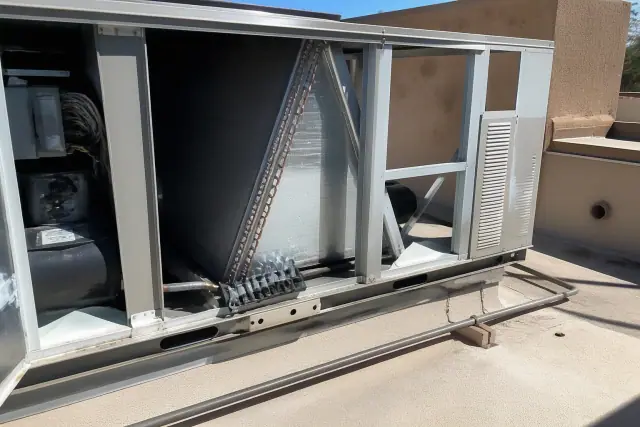
HVAC technician performing a seasonal tune-up on a commercial rooftop unit in Gilbert, AZ.

Curb-mounted rooftop units can be repaired in place or replaced with a crane set when repair is no longer economical. Matching curb dimensions and electrical service helps prevent avoidable adapter work on strip malls, medical buildings, and warehouses.

Commercial Refrigeration

Technician repairing a walk-in cooler evaporator coil at a commercial jobsite in Gilbert, AZ.

Refrigeration service covers walk-in coolers and freezers, reach-in cases, and ice-machine troubleshooting for restaurants, grocers, and convenience markets. Fast diagnosis matters because rising product temperature can become an inventory and health-code problem.

Commercial Ductwork

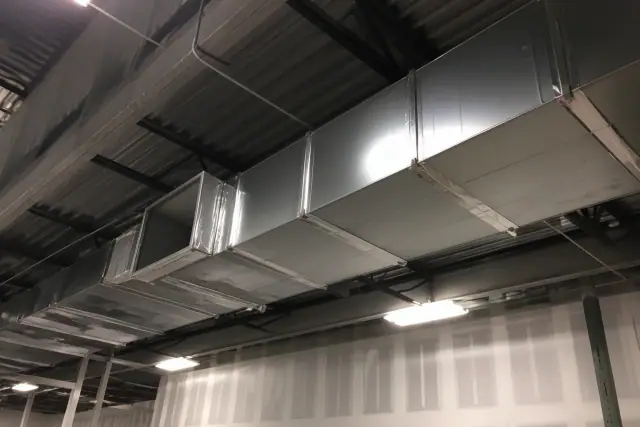
Galvanized steel rectangular ductwork suspended from an industrial ceiling in a Gilbert, AZ warehouse.

Sheet-metal ductwork is fabricated and sealed to SMACNA standards to reduce conditioned-air loss. Hood measurements and duct traverses support airflow rebalancing when tenant spaces have persistent hot and cold spots.

Building Automation & HVAC Controls

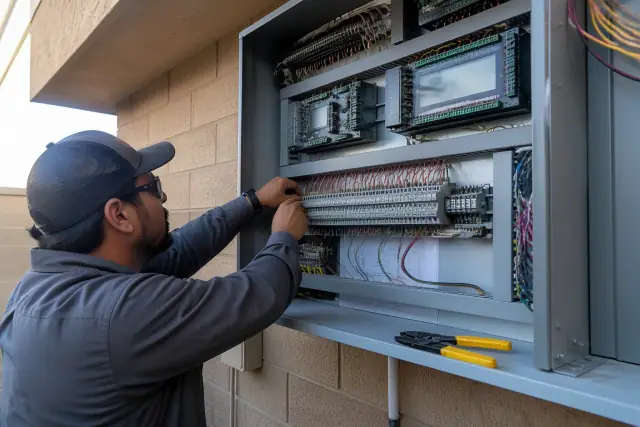
Technician wiring a building automation control cabinet in a mechanical room in Gilbert, AZ.

BAS and EMS platforms can schedule setbacks, stage equipment, and flag faults remotely. For multi-tenant buildings, coordinated controls and VFD-controlled fans provide a practical route to managing peak-summer utility demand.

Commercial Indoor Air Quality

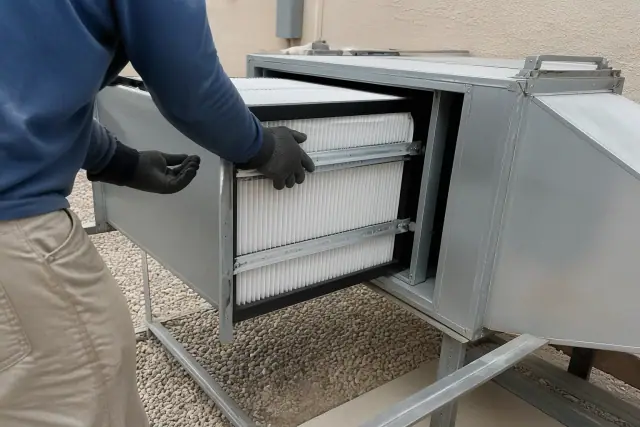
Technician installing a commercial air purification unit into ductwork at a jobsite in Gilbert, AZ.

MERV-rated filtration upgrades, UV-C coil treatment, and ventilation adjustments address particulate pressure from dust storms and monsoon activity. Ventilation recommendations can be aligned with ASHRAE 62.1 outdoor-air requirements for occupied commercial spaces.

VRF System Service

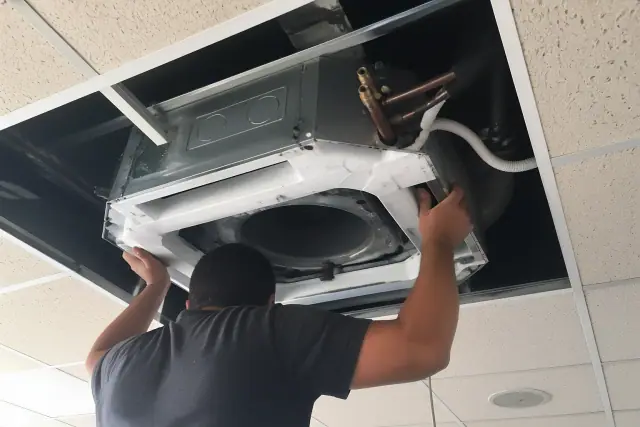
Technician installing a ceiling-cassette VRF unit into a drop ceiling at a job site in Gilbert, AZ.

Variable refrigerant flow systems in newer office and mixed-use construction require specialized refrigerant-piping knowledge. Troubleshooting uses manufacturer-specific diagnostic tools to isolate control, refrigerant, and indoor-unit faults.

Restaurant HVAC & Kitchen Ventilation

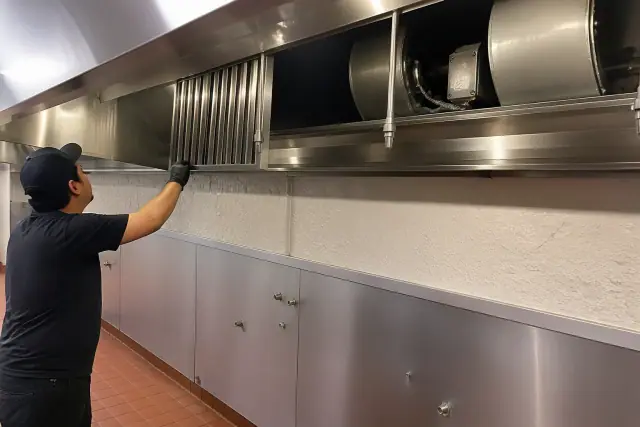
Technician inspecting a commercial kitchen grease filter and exhaust hood at a restaurant in Gilbert, AZ.

Restaurant service includes makeup-air units, dining-room rooftop systems, exhaust fans, hood dampers, and fire-suppression interlocks. Cleaning, repair, and balancing account for NFPA 96 grease-exhaust requirements while coordinating kitchen exhaust with dining-area comfort.

System Selection

How to Choose the Right Commercial HVAC Approach

The right repair, replacement, or optimization plan depends on the building load, operating schedule, equipment condition, and business use. A commercial evaluation should connect those factors to comfort, refrigeration, ventilation, controls, and long-term service needs.

Load and Capacity Planning

Manual N commercial load calculations account for the actual demands of new construction and tenant improvements. Sizing should reflect occupancy, internal loads, operating hours, and Gilbert's sustained summer heat instead of relying on a rule of thumb.

Building and Use Requirements

A restaurant kitchen, cold-storage area, server room, medical clean room, retail floor, and standard office suite each impose different mechanical demands. Equipment and airflow choices should start with the property's use rather than a one-size-fits-all package.

Efficiency and Controls Strategy

Energy-efficient HVAC upgrades can cut energy consumption by 20 to 50%. Proper refrigerant charge, staged operation, scheduled setbacks, and VFD-controlled fans help translate equipment efficiency into practical performance during peak-demand periods.

Rooftop Installation Logistics

A replacement RTU plan should verify curb dimensions, electrical service, rigging access, and crane-set coordination before work begins. Those details can prevent adapter work and reduce disruption around an occupied commercial property.

Code and Permit Coordination

Commercial mechanical work follows the International Mechanical Code adopted by the Town of Gilbert Building Division. Installation and replacement planning includes required permits and coordination with Town building inspectors, while refrigerant handling remains subject to federal EPA Section 608 rules.

Service Access and Lifecycle

Well-maintained commercial systems commonly last 15 to 20 years, while neglected equipment in this climate can fail by year 10 to 12. Access for coil cleaning, belts, electrical checks, and future diagnostics should be part of both equipment selection and installation planning.

Gilbert HVAC Issues

Common Commercial HVAC Problems in Gilbert

Extended run times, rooftop exposure, desert dust, and demanding commercial schedules accelerate several predictable failure patterns. Early diagnostics can separate a repairable component issue from a broader airflow, refrigerant, controls, or equipment-life problem.

Request Diagnostics

Extreme Rooftop Heat

Summer highs frequently exceed 110 degrees, and rooftop equipment can remain in direct sun for ten or more hours a day. The resulting duty cycles accelerate compressor wear, refrigerant breakdown, and belt fatigue.

Dust-Clogged Condenser Coils

Fine desert dust can choke condenser coils and restrict heat rejection. The unit then runs harder and longer, making coil condition an important part of both no-cool diagnostics and preventative cleaning.

Electrical Component Wear

Failed run capacitors and pitted contactors are common causes of commercial cooling breakdowns under long operating cycles. Electrical tightening, amp readings, and component testing help reveal wear before it becomes a larger interruption.

Low Refrigerant or Leaks

Low refrigerant charge and refrigerant leaks reduce cooling capacity and can place added stress on the compressor. Gauge readings and a complete system diagnostic should establish the condition before a repair is recommended.

Uneven Airflow

Leaky or undersized ductwork can lose conditioned air before it reaches occupied areas. Airflow measurements, sheet-metal sealing, and system rebalancing help identify why one tenant space is hot while another is cold.

Refrigeration Temperature Failure

A warming walk-in cooler or freezer can threaten inventory and create a health-code concern. Troubleshooting may cover the refrigeration circuit, controls, case components, and ice-machine operation rather than treating the symptom alone.

Why Choose Us

Why Gilbert Businesses Choose Phoenix Commercial HVAC

Commercial properties need technicians who understand package units, split systems, VRF, refrigeration, kitchen ventilation, and building controls. Phoenix Commercial HVAC combines that equipment scope with local climate knowledge, code-aware planning, and diagnostics built around the building's operating needs.

Gilbert Commercial Experience

Experience spans single-tenant retail pads, strip malls, restaurants, medical campuses, office parks, multi-story offices, and light-industrial properties. That building context helps shape the right response for comfort cooling, cold storage, server rooms, or specialized occupied spaces.

Commercial Credentials

The company operates under Arizona Registrar of Contractors licensing, and its technicians hold current EPA 608 certification for refrigerant work. Technicians are background-checked and trained on commercial package units, split systems, VRF, and refrigeration equipment.

Diagnostics and Maintenance Planning

Recommendations follow commercial diagnostics rather than guesswork, with findings tied to repair condition, system age, and operating demands. Facility teams managing mid-size commercial buildings report annual HVAC maintenance spending between $18,000 and $65,000 depending on square footage and equipment count, so structured planning helps keep the work predictable instead of reactive.

Commercial Service Process

Our Commercial HVAC Service Process in Gilbert

The process starts with the building's symptoms, equipment, and operating requirements, then moves through evaluation, options, work, and verification. Installation and replacement scopes also account for permits, inspections, controls, airflow, and future maintenance access.

01.

Review the Service Need

We begin with the building type, affected equipment, symptoms, operating schedule, and business impact. Emergency and after-hours requests are prioritized around occupied retail, medical offices, restaurants, and refrigeration risks.

02.

Inspect and Diagnose

Technicians inspect the system and use gauges, amp readings, airflow measurements, controls diagnostics, and component tests as appropriate. The goal is to identify the underlying mechanical, electrical, refrigerant, duct, or control fault.

03.

Review the Recommended Scope

Findings are connected to a repair, maintenance, optimization, or replacement recommendation. For aging equipment, the review can compare accumulating repair costs with high-efficiency replacement choices and payback considerations.

04.

Coordinate the Work

Service is scheduled around building operations to limit disruption. Installation and replacement projects add equipment access, crane work, mechanical permits, and Town of Gilbert inspection coordination when required.

05.

Test System Performance

Completed work is checked for cooling or refrigeration performance, refrigerant charge, electrical operation, airflow, controls, and ventilation as the scope requires. Balancing may include hood measurements and a duct traverse when hot and cold spots are involved.

06.

Plan Ongoing Maintenance

A maintenance plan can track coils, belts, bearings, refrigerant charge, electrical connections, and developing component wear. A quarterly schedule is designed around Arizona's climate and the demands of commercial operating hours.

Service Outcomes

Commercial HVAC Outcomes for Gilbert Properties

Case Study 1: Retail comfort: Diagnosing a failed rooftop component and restoring airflow helps protect occupied sales floors from prolonged heat exposure.

Case Study 2: Restaurant continuity: Coordinating walk-in refrigeration, makeup air, exhaust, and dining-room cooling supports both product temperature and guest comfort.

Case Study 3: Office performance: Combining controls scheduling, airflow balancing, and filtration adjustments can address hot spots, peak demand, and occupied-space air quality together.

Plan Commercial Service

Schedule a Gilbert Commercial HVAC Consultation

Tell us about the affected equipment, building use, symptoms, and operating schedule. We can discuss diagnostics, repair, replacement, maintenance, refrigeration, ventilation, controls, or indoor air quality for your Gilbert commercial property.

Commercial HVAC Help

FAQs About Commercial HVAC in Gilbert, AZ

These answers cover common questions about commercial cooling, refrigeration, ventilation, replacement, and maintenance in Gilbert. A building-specific diagnosis is still the best way to identify the right scope.

Call Our Experts

Services include commercial HVAC repair, installation and replacement, maintenance, rooftop-unit work, refrigeration, ductwork, building controls, indoor air quality, VRF service, and restaurant HVAC and kitchen ventilation. The scope covers package units, split systems, and specialized commercial equipment.

Common causes include failed run capacitors, pitted contactors, low refrigerant charge, leaks, and condenser coils clogged with fine desert dust. Long summer duty cycles can accelerate compressor, belt, and electrical-component wear.

Technicians use gauges, amp-draw readings, component tests, controls diagnostics, and airflow measurements as the equipment and symptom require. That evaluation helps separate an electrical fault from a refrigerant, mechanical, duct, or control problem before a recommendation is made.

The maintenance plans described for Arizona conditions use a quarterly schedule. Visits can include coil cleaning, belt and bearing checks, refrigerant-charge verification, and electrical tightening.

Replacement becomes worth reviewing when repair costs accumulate on aging equipment or the unit is beyond economical repair. The decision can consider system condition, service history, efficiency, high-efficiency options, and payback rather than age alone.

Curb-mounted RTUs may be diagnosed and repaired in place. If replacement is appropriate, the scope can include matching curb dimensions and electrical service plus crane-set coordination to avoid unnecessary adapter work.

Yes. Commercial refrigeration work includes walk-in cooler and freezer repair, reach-in case service, and ice-machine troubleshooting for restaurants, grocery stores, and convenience markets.

Yes. Leaky or undersized ductwork can waste conditioned air before it reaches the space and leave tenant areas uneven. Sheet-metal sealing plus airflow measurements with a hood and duct traverse can guide rebalancing.

BAS and EMS platforms can schedule temperature setbacks, stage equipment, and flag faults remotely. Those capabilities can help multi-tenant buildings manage comfort and utility demand during Gilbert summers.

The scope can include makeup-air units, rooftop systems serving dining rooms, exhaust fans, hood dampers, and fire-suppression interlocks. Balancing the kitchen exhaust and dining-area comfort systems helps address both grease-exhaust requirements and occupied-space conditions.

Options named for commercial spaces include MERV-rated filtration upgrades, UV-C coil treatment, and ventilation adjustments. The ventilation portion can be aligned with ASHRAE 62.1 outdoor-air requirements for occupied spaces.

VRF troubleshooting requires specialized refrigerant-piping knowledge and manufacturer-specific diagnostic tools. Those systems are increasingly common in newer Gilbert office and mixed-use construction near SanTan Village.

New installation and replacement projects can require mechanical permits and Town of Gilbert building inspections. The work falls under the International Mechanical Code adopted by the Town's Building Division, so permit and inspection coordination belongs in project planning.

Technicians hold current EPA 608 certification and are trained on commercial package units, split systems, VRF, and refrigeration equipment. The company operates under Arizona Registrar of Contractors licensing for its commercial HVAC work.

Yes. Emergency dispatch prioritizes restaurants, medical offices, and occupied retail spaces where equipment failure can create an immediate business or occupant risk, and after-hours work can be scheduled around building operations.