Proudly serving Phoenix, Mesa, Scottsdale, Tempe, Chandler, Glendale & surrounding areasCall or Text 24/7: 480-300-4493
Aerial drone view of a residential neighborhood with Saguaro cacti and stucco homes in Phoenix, AZ.

Commercial HVAC System Repair and Maintenance in Peoria, AZ

Phoenix Commercial HVAC provides commercial HVAC repair, installation and replacement, and preventive maintenance for businesses in Peoria, Arizona. Our team also services rooftop units, commercial refrigeration, ductwork, building automation and controls, indoor air quality equipment, VRF systems, and restaurant ventilation. We work with offices, warehouses, retail spaces, medical facilities, industrial properties, and food-service operations. Each visit is built around the equipment, occupancy, and operating demands of the property.

Peoria's summer temperatures routinely climb past 110 degrees, while rooftop equipment often runs near-continuously from May through September. Dust storms, hard water, and long duty cycles can accelerate coil fouling, electrical failures, and compressor wear. Our licensed, insured, and background-checked technicians diagnose the root cause before recommending work. We provide a written estimate before repairs begin, and free HVAC estimates are available for businesses planning service.

Coverage includes commercial districts near Arrowhead Towne Center, Lake Pleasant Parkway, Loop 101, Bell Road, Peoria Airport, Old Town Peoria, and the P83 entertainment district, along with Sun City, Sun City West, Glendale, Surprise, and the supported Maricopa and Yavapai County service territory.

★ ★ ★ ★ ★4.9/5.0 Customer Rating - 31 Years of HVAC Experience - Thousands of Commercial Systems Serviced - Licensed, Bonded & Insured - Serving Commercial & Industrial Properties
Commercial HVAC Services

Commercial HVAC Services in Peoria, AZ

Peoria businesses can use one commercial contractor for urgent repair, equipment installation and replacement, scheduled maintenance, refrigeration, air distribution, controls, and specialized indoor environments. We evaluate the whole system so equipment, ductwork, controls, ventilation, and operating loads work together. Organizations managing facilities elsewhere in the West Valley can also review our commercial HVAC coverage in Goodyear, AZ .

Commercial HVAC Repair

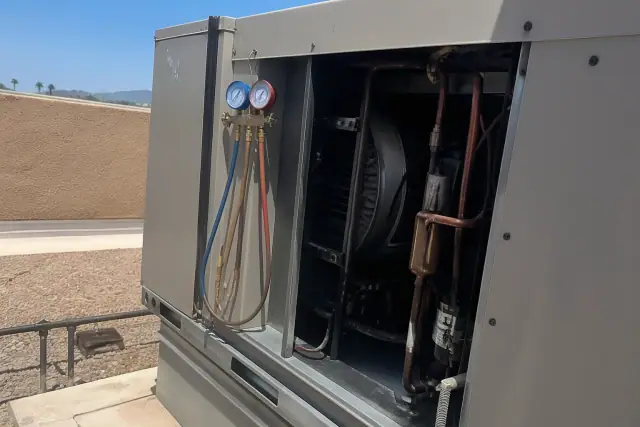
Technician performing a seasonal commercial HVAC tune-up on a rooftop unit in Peoria, AZ.

Technicians trace compressor failures, refrigerant leaks, failed contactors, worn fan motors, and capacitor problems with amp-draw readings, superheat and subcooling measurements, and static-pressure tests. Common OEM parts carried on service trucks help support same-day completion for most standard commercial repairs.

Explore Service

Commercial HVAC Installation & Replacement

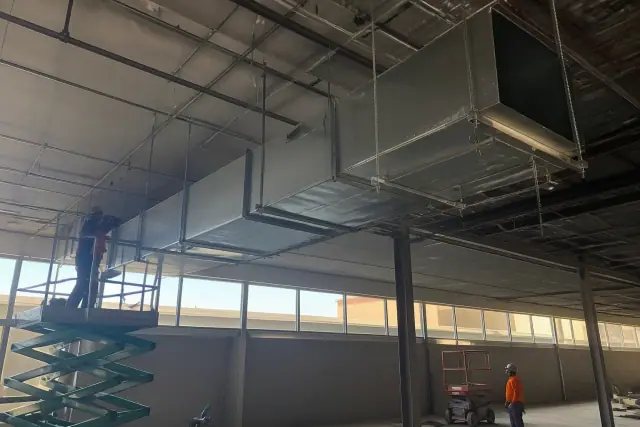
Sheet metal workers installing galvanized steel HVAC ductwork from a high ceiling in a Peoria, AZ industrial warehouse.

New systems are sized with Manual N or block-load calculations that account for the building envelope, occupancy, and equipment loads. Installation and replacement work includes City of Peoria permits, current International Mechanical Code requirements, startup commissioning, refrigerant recovery under EPA Section 608, and equipment typically rated 10-15 SEER2 or better according to tonnage and application.

Explore Service

Commercial HVAC Maintenance

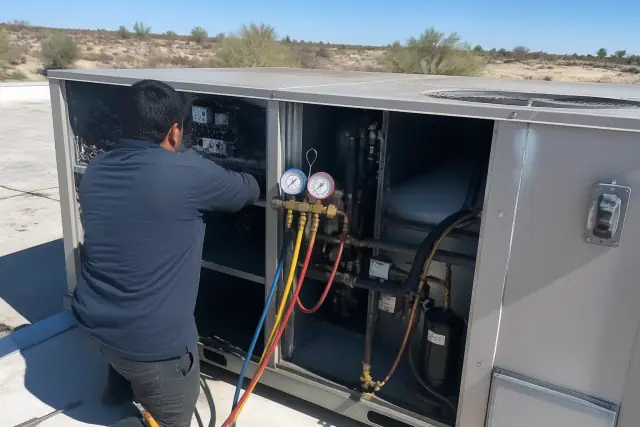
Technician performing a seasonal HVAC tune-up on a commercial rooftop unit in Peoria, AZ.

Preventive visits cover coil cleaning, refrigerant-charge verification, filters, belts, bearings, drain lines, electrical connections, and operating readings. Service schedules are matched to equipment and usage so facilities can address wear before Peoria's peak cooling load.

Explore Service

Rooftop Unit (RTU) Service & Replacement

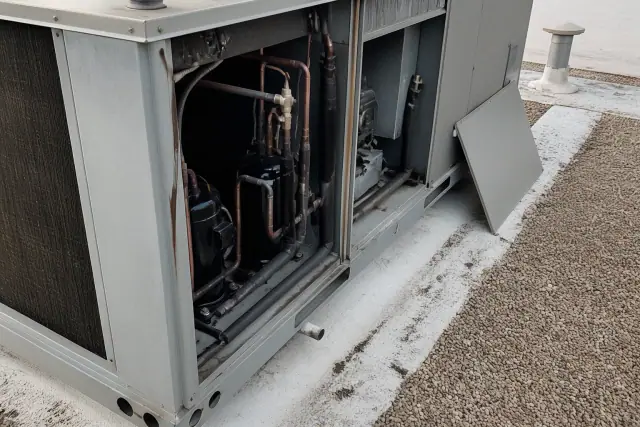
HVAC technician performing a seasonal tune-up on a rooftop unit in Peoria, AZ.

Dust and haboob activity can clog RTU condenser coils, restrict airflow, and raise head pressure. Packaged rooftop units in this climate often reach replacement planning between years 12 and 15; service includes economizer checks, coil cleaning, curb-seal inspection, and coordination of crane lifts, curb adapters, and electrical disconnects when replacement is warranted.

Commercial Refrigeration

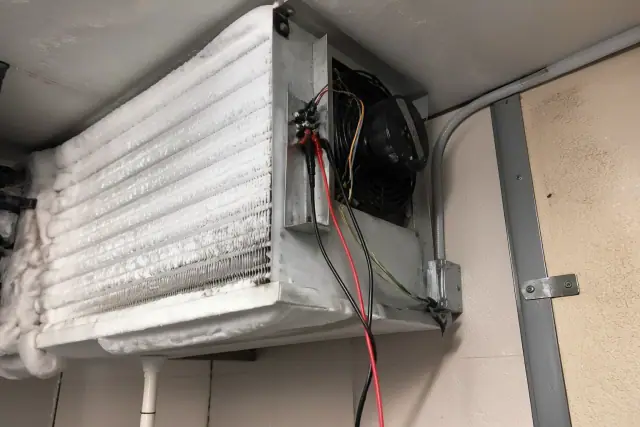
Technician testing a frosted evaporator coil in a walk-in commercial refrigerator in Peoria, AZ.

Service covers walk-in coolers, reach-in units, and ice machines for restaurants, grocers, and convenience stores. Technicians inspect compressors, evaporator coils, defrost controls, door gaskets, and refrigerant leaks under the demanding ambient conditions created by Peoria heat.

Commercial Ductwork

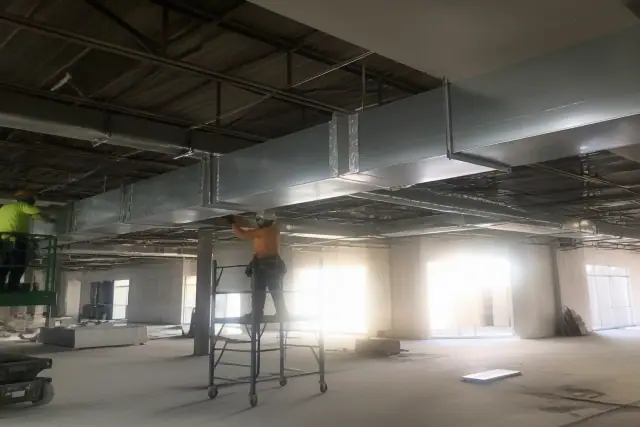
Sheet metal workers installing galvanized steel ductwork on a ceiling in a commercial building in Peoria, AZ.

Ductwork repair addresses leaking seams, damaged insulation, undersized runs, and static-pressure problems that keep conditioned air from reaching occupied spaces. Sealing, correction, and replacement work for renovations or tenant improvements follows SMACNA sizing standards.

Building Automation & HVAC Controls

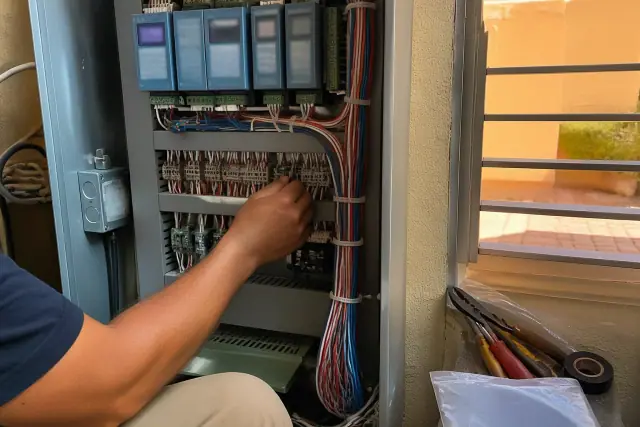
Technician wiring a commercial HVAC control cabinet in a Peoria, AZ mechanical room.

Commercial thermostats, sensors, zone controllers, and building automation provide visibility into temperatures, runtime, and fault codes across multiple units. Larger offices, medical facilities, and multi-tenant properties can integrate rooftop units, exhaust fans, and lighting through BACnet and other open protocols.

Commercial Indoor Air Quality

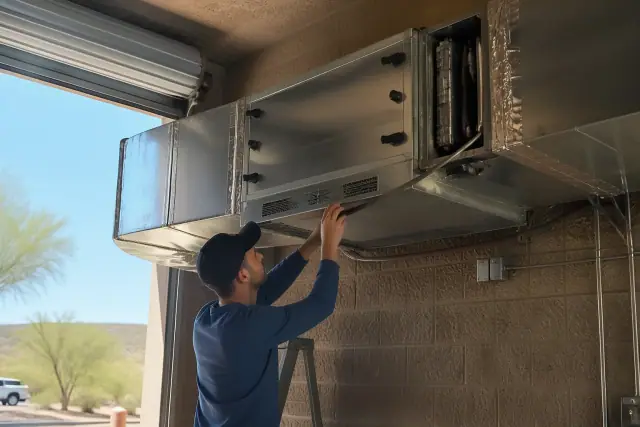
Technician installing a commercial air purification unit into ductwork at a jobsite in Peoria, AZ.

Dust, pollen, and monsoon humidity spikes can affect indoor conditions in Peoria commercial buildings. Options include MERV-13 and higher filtration, UV coil sterilization, and dedicated dehumidification sized for medical offices, schools, food-service spaces, and other demanding environments.

VRF System Service

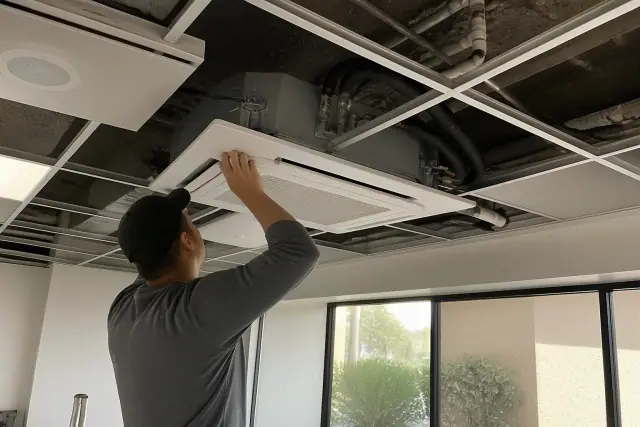
Technician installing a VRF indoor ceiling cassette unit in a commercial building in Peoria, AZ.

VRF service for newer office and medical buildings includes branch-controller diagnostics, refrigerant-piping charge calculations, and communication-wiring troubleshooting. Technicians work across major manufacturer lines and source replacement boards and sensors for zoning-related faults.

Restaurant HVAC & Kitchen Ventilation

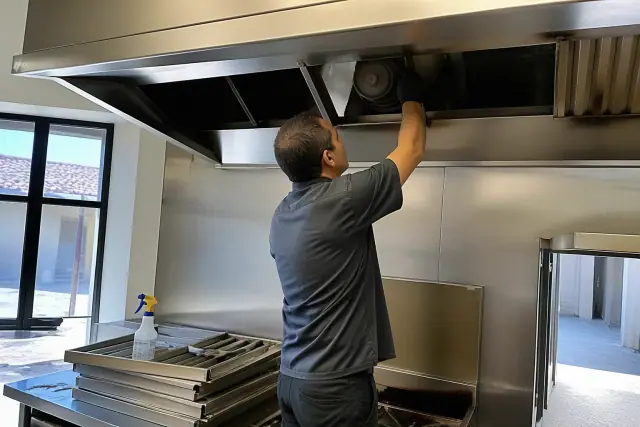
Contractor inspecting a commercial kitchen exhaust hood and grease filters at a jobsite in Peoria, AZ.

Restaurant service coordinates hood exhaust fans, makeup air, grease-duct access, refrigeration, and rooftop cooling under the combined heat load of cooking equipment and Peoria weather. Work accounts for Maricopa County Environmental Services requirements and NFPA 96 provisions governing commercial kitchen ventilation and fire suppression.

Service Planning

How to Choose Commercial HVAC Service in Peoria, AZ

The right service decision starts with the equipment symptoms, building use, operating schedule, airflow, and remaining system life. A commercial contractor should show how diagnostics, load calculations, code requirements, maintenance history, and written pricing shape the recommendation.

Root-Cause Diagnostics

Look for troubleshooting that measures electrical load, refrigerant performance, and airflow before parts are replaced. Amp draw, superheat, subcooling, and static-pressure readings help distinguish a failed component from the condition that caused it.

Load-Based Equipment Sizing

Replacement capacity should reflect the building envelope, glazing, occupancy, and internal equipment heat, not square footage alone. Manual N or block-load calculations reduce the risk of selecting equipment that cannot manage the property's real demand.

Maintenance Matched to Usage

Restaurants, medical facilities, manufacturing spaces, offices, and retail properties place different loads on filters, coils, belts, bearings, and drains. A useful maintenance plan adjusts task frequency to equipment type, hours of operation, and manufacturer guidance.

Permit and Code Coordination

Commercial installation should include required permits through the City of Peoria Building Safety Division and work aligned with the current International Mechanical Code. Kitchen projects also require attention to the exhaust and fire-suppression rules that apply to that environment.

System-Wide Compatibility

An equipment choice must work with existing duct capacity, curb dimensions, electrical disconnects, controls, and ventilation. Reviewing those interfaces early can prevent a new unit from being limited by restricted airflow or incompatible control wiring.

Clear Estimates and Service Records

A written estimate should define the recommended work before repairs begin. Photos, readings, and visit histories make recurring problems easier to track and give facility teams better information for warranty support and capital-replacement planning.

Peoria HVAC Issues

Common Commercial HVAC Problems for Peoria Businesses

During peak season, Peoria rooftop units may run 14 to 16 hours a day for five straight months. If cooling stops, an occupied retail or office space can climb past 100 degrees within a few hours, making early diagnosis important for safety and continuity.

Request HVAC Diagnosis

Compressor and Electrical Failures

Sustained heat and long run cycles strain compressors, capacitors, contactors, and fan motors. Burning smells, unusual noise, hard starts, or a complete shutdown call for electrical testing before additional components are damaged.

Refrigerant Leaks and Charge Problems

Low charge, leaks, or incorrect refrigerant conditions can reduce cooling and force equipment to run longer. Pressure checks, superheat and subcooling measurements, and leak detection identify whether the issue is charge, airflow, or a failing component.

Dust-Clogged Condenser Coils

Dust storms and haboobs can coat outdoor coils and limit the heat they release. The resulting airflow restriction raises head pressure, increases compressor strain, and makes routine coil cleaning especially important for rooftop units.

Restricted Airflow and Duct Losses

Leaky seams, undersized duct runs, fouled filters, and damaged insulation can waste conditioned air or create uneven rooms. Static-pressure testing helps locate restrictions before a larger unit is incorrectly recommended.

Control and Sensor Faults

Failed sensors, communication wiring, zone controllers, or poor setpoint schedules can make sound equipment behave erratically. Control diagnostics compare temperature, runtime, and fault-code data across individual units and building automation.

Kitchen Heat and Ventilation Loads

Cooking equipment, grease-laden exhaust, makeup air, and refrigeration add loads that standard office designs do not face. Imbalanced airflow or an exhaust-fan failure can disrupt kitchen comfort and operations even when the dining-room unit is running.

Why Choose Us

Why Peoria Businesses Choose Phoenix Commercial HVAC

Our team works across repair, replacement, preventive maintenance, refrigeration, controls, air distribution, and specialized commercial environments. Facility managers receive diagnostics tied to the root cause, a written estimate before work begins, and documentation that supports ongoing equipment planning.

Licensed and Insured Technicians

Every technician is licensed, insured, and background-checked before entering a customer property. That preparation matters in occupied offices, medical spaces, retail buildings, restaurants, and industrial facilities.

Commercial Refrigerant Expertise

EPA Section 608 refrigerant handling, leak detection, recovery, charge calculations, and awareness of the R-410A phasedown support responsible commercial service. The team also works with lower-GWP alternatives as refrigerant rules and equipment platforms evolve.

Local West Valley Coverage

Regular routes cover Peoria commercial corridors and supported West Valley communities including Glendale, Surprise, Sun City, and Sun City West. The territory spans Maricopa County and the small Yavapai County portion of northern Peoria.

Commercial Service Process

Our Commercial HVAC Repair Process in Peoria, AZ

Each repair begins with symptom review, proceeds through measured on-site diagnostics, and ends with a defined recommendation and documented result. The sequence helps facility teams understand the cause, scope, and next action before authorizing work.

01.

Phone Symptom Review

We start by asking what the equipment is doing, when the problem began, which spaces are affected, and whether occupancy or food storage creates an immediate operational risk.

02.

On-Site System Diagnostics

A technician checks electrical operation, refrigerant pressures against manufacturer specifications, coil condition, filters, and airflow at the equipment and diffusers.

03.

Root-Cause Scope

Readings are used to separate the failed part from contributing conditions such as restricted airflow, dirty coils, control faults, refrigerant loss, or duct problems.

04.

Written Estimate

You receive a written estimate before repair work begins, with the recommended scope explained so the decision does not depend on surprise charges.

05.

Prioritized Repair

Dispatch priority reflects building occupancy and risk, with restaurants, medical offices, and occupied retail spaces moved ahead of routine work. Trucks carry common capacitors, contactors, motors, refrigerants, and rooftop-unit parts.

06.

Startup and Service Documentation

After the work, operating conditions are checked and the visit is documented with relevant photos and readings. That service history helps track recurring issues and plan maintenance or future replacement.

Operational Priorities

Commercial HVAC Priorities for Peoria Properties

Case Study 1: Retail and office comfort: Root-cause diagnostics focus on restoring stable temperatures while accounting for occupancy, airflow, and long summer run cycles.

Case Study 2: Rooftop replacement planning: Side-by-side efficiency and cost comparisons account for equipment condition, curb fit, ductwork, controls, crane access, and expected downtime.

Case Study 3: Maintenance visibility: Photos, operating readings, and visit histories give facility teams a clearer basis for warranty support and capital budgeting.

Plan Your Service

Schedule Commercial
HVAC Service in
Peoria, AZ

Tell us what your building and equipment are doing, and we will help define the appropriate next step. Phoenix Commercial HVAC provides free estimates for planned work and written estimates before repairs begin. Call or use the estimate form to discuss commercial service in Peoria.

Commercial HVAC Help

Commercial HVAC FAQs for Peoria, AZ

These answers cover commercial maintenance, repair-versus-replacement decisions, equipment life, qualifications, local operating conditions, and specialized service needs described for Peoria properties.

Call Our HVAC Team

Commercial HVAC maintenance is a scheduled program of inspections and service tasks for rooftop units, split systems, refrigeration, and related equipment. Typical work includes coil cleaning, refrigerant checks, filter replacement, airflow testing, electrical-connection inspection, and belt or bearing service. Plans should reflect equipment type and usage rather than rely on one generic checklist.

The $5,000 rule is a rough repair-versus-replacement guideline, not a code or legal requirement. Multiply the unit's age by the estimated repair cost; a result above $5,000 points toward discussing replacement alongside efficiency, remaining life, and operational needs. Under that formula, a 10-year-old unit with a $600 repair produces a $6,000 result.

Well-maintained commercial rooftop units in Arizona can deliver 15 to 20 years of service, although extreme heat and long duty cycles may shorten component life. Coil cleaning, refrigerant checks, installation quality, building use, and equipment condition all influence where a system falls within that range.

Arizona has no blanket statewide rule requiring air conditioning in every commercial building. Workplace-safety duties and locally adopted mechanical codes may still apply, while residential rental cooling is governed in a different legal context. Owners should confirm current requirements for their property and use with the appropriate local or legal authority.

Call promptly for a complete cooling failure in an occupied restaurant, medical facility, retail space, or other building where temperature affects safety or operations. Burning smells, unusual noises, water leaks, and sudden energy-use spikes also warrant prompt diagnosis. The team prioritizes dispatch by occupancy and risk, and same-day response is standard for most commercial emergencies in the supported service area.

A qualified contractor should hold an active Arizona Registrar of Contractors license, carry general-liability and workers' compensation insurance, use EPA Section 608-certified technicians for refrigerant work, and pull required permits. Current training should also cover evolving refrigerant requirements, including the R-410A phasedown and lower-GWP alternatives.

Most Peoria commercial HVAC equipment should be serviced at least twice a year, before peak cooling and before heating demand. Restaurants, medical facilities, and manufacturing spaces may benefit from quarterly service because of heavier or more continuous loads. Refrigeration may need the same or a more frequent inspection schedule based on equipment and product-loss risk.

Commercial HVAC maintenance averages $0.15 to $0.30 per square foot annually. Preventive strategies also run 20 to 40 percent more cost-effective than reactive repair over the equipment's life. Actual planning should still reflect the system mix, building use, and service scope.

The U.S. Department of Energy estimates that effective commercial HVAC operation and maintenance can save organizations 5 to 20 percent on energy costs. Higher-SEER2 equipment can also reduce energy consumption by 20 to 50 percent compared with older systems still operating in many Peoria buildings. Results depend on sizing, controls, airflow, condition, and operating patterns.

Commercial buildings still need dependable heating during cooler early mornings from December through February. Heat pumps and gas-fired packaged units share rooftop equipment with the cooling system, so seasonal checks should include heat exchangers, ignition modules, and reversing valves before a 40-degree morning exposes a failure.

Services described in the source include commercial repair, installation and replacement, maintenance, rooftop-unit work, refrigeration, ductwork, building automation and controls, indoor air quality, VRF systems, and restaurant HVAC and kitchen ventilation. The appropriate scope depends on the building, equipment, occupancy, and reported symptoms.

Diagnosis begins with the symptoms and continues on site with electrical checks, refrigerant pressures, amp draw, superheat and subcooling, coil condition, and airflow or static-pressure measurements. Those readings help identify whether the root issue is a component, refrigerant condition, restriction, controls problem, or duct loss.

Replacement becomes worth evaluating when repair costs accumulate, reliability declines, or the unit is nearing its expected replacement window in Peoria's climate. The decision should also account for efficiency, equipment fit, ductwork, controls, crane access, downtime, and the building's operational needs.

Dust and haboob activity can clog condenser coils, restrict airflow, and raise head pressure. That extra strain can reduce cooling performance and burden the compressor, so coil inspection and cleaning are important parts of rooftop service in this market.

Restaurants must balance cooking heat, hood exhaust, makeup air, rooftop cooling, and walk-in refrigeration as one operating environment. Service can include exhaust fans, makeup-air balancing, grease-duct access, and refrigeration, with attention to Maricopa County Environmental Services requirements and NFPA 96 provisions.