Proudly serving Phoenix, Mesa, Scottsdale, Tempe, Chandler, Glendale & surrounding areasCall or Text 24/7: 480-300-4493
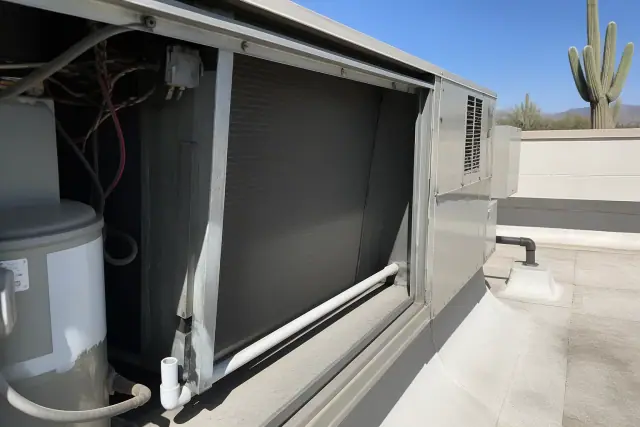
Aerial drone view of a residential neighborhood with Saguaro cacti and stucco homes in Phoenix, AZ.

Affordable Commercial HVAC Repair and Maintenance in Phoenix, AZ

Phoenix facilities looking for cheap commercial HVAC service can turn to Phoenix Commercial HVAC for repair, installation, and maintenance of rooftop units, split systems, and VRF systems. We shape affordable scopes for restaurant kitchens, office towers, retail plazas, and industrial buildings from the Camelback Corridor to Deer Valley. Established supplier relationships help us source inexpensive parts that meet manufacturer specifications. Budget-friendly maintenance plans can catch developing problems before they become five-figure failures. We also help owners recognize when the cheapest bid leaves out permits, commissioning, or work needed for lasting performance.

Useful quote comparisons begin with matching scope, materials, access conditions, and code requirements line for line. An estimate should identify equipment, labor, curb adaptation, electrical work, permits, disposal, startup, and commissioning rather than present one unexplained number. Crane access, ductwork condition, and controls integration can make identical-looking projects materially different. An on-site inspection documents those conditions so owners seeking low cost or the lowest prices can compare real tradeoffs instead of risking a five-figure failure after a short-lived fix.

Compare Commercial HVAC Prices and Options

Commercial HVAC price ranges only become useful when the unit, installed scope, pricing unit, and cost drivers are visible together. Compare the ranges below with your equipment type, building size, access, and contract coverage, then use the calculator to organize the next level of project detail.

Commercial HVAC Price Ranges by Project Scope

Commercial HVAC scopePrice rangeWhat the range covers or what changes it
Rooftop unit replacement$5,400 to $14,200 installedUnit tonnage and efficiency tier change the installed replacement cost.
Full commercial HVAC system$5,000 to $50,000 or more per installationSystem type and building square footage determine the project scale.
Phoenix commercial HVAC service-level project$1,772 to $2,115 per projectUnit size and job complexity move work within this broader local range.
HVAC maintenance agreement visit$75 to $150 per visitContract structure, visit frequency, and included coverage affect the total.
After-hours HVAC diagnostic$150 to $300 per service callAfter-hours timing and priority response commonly increase the diagnostic rate.

Affordable Commercial HVAC Options in Phoenix, AZ

An inexpensive commercial HVAC plan is not automatically a reduced scope. Repairing a serviceable component, replacing one aging rooftop unit at a time, or using scheduled maintenance can each fit a different building and budget. The right choice accounts for equipment condition, cooling demands, code obligations, and the cost of another interruption during a Phoenix summer.

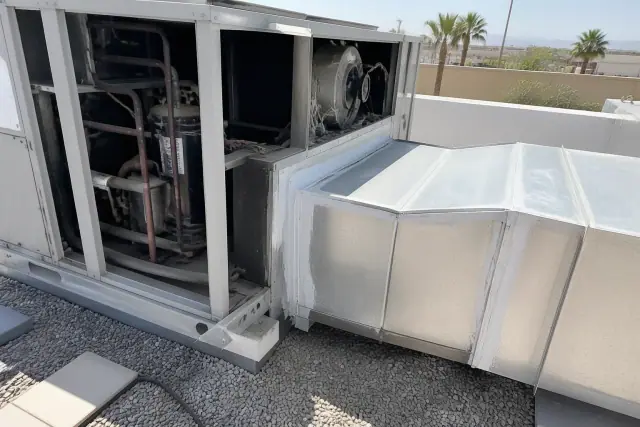
A rooftop HVAC unit with an open panel and fresh silver sealant on a commercial roof in Phoenix, AZ.

Right-Size Repair or Replacement Scope

The $5,000 rule is one planning tool for a repair-versus-replacement decision: multiply the unit's age in years by the estimated repair cost, and a result above $5,000 generally points toward replacement. Actual equipment condition, load requirements, and the complete project scope still matter.

  • Inspect ductwork, electrical capacity, roof structure, and existing curb dimensions before choosing a scope.
  • Compare repair and replacement carefully when an older system uses R-22 refrigerant, which is no longer produced.
  • Phase aging rooftop-unit replacements across budget cycles when a multi-unit property has staggered equipment ages.
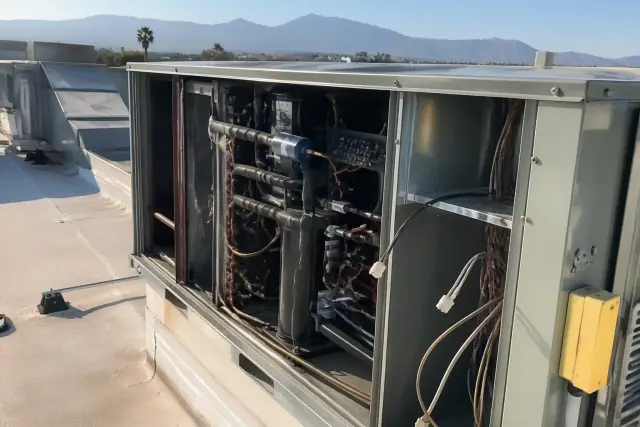
Internal components of a commercial rooftop HVAC unit during a seasonal tune-up in Phoenix, AZ.

Compare Equipment and Service Options

Packaged rooftop units, split systems, and VRF systems have different equipment, labor, ductwork, and controls requirements. A cost-conscious selection starts with the building load and existing infrastructure rather than choosing the lowest equipment price in isolation.

  • Packaged rooftop units can simplify replacement when curb dimensions, electrical service, and duct connections align.
  • Split systems separate indoor and outdoor equipment, changing access, piping, and labor needs.
  • VRF zoning and building automation controls add value where the number of zones and existing integration justify the scope.
Technician performing seasonal maintenance on a commercial rooftop HVAC unit in Phoenix, AZ.

Protect Long-Term Commercial HVAC Value

A cheap repair that leaves airflow, refrigerant charge, or controls unverified can undermine equipment durability and operating efficiency. Documented startup and commissioning make the completed work measurable instead of assumed.

  • Preventive maintenance can identify failing capacitors, refrigerant leaks, and dirty coils before compressor failure.
  • Economizers and variable-speed drives can lower operating costs over the equipment's service life when they suit the rooftop system.
  • Confirm compressor, parts, labor, registration, and documentation terms instead of assuming every warranty covers the same items.

Commercial HVAC Cost Factors in Phoenix, AZ

Project size, equipment condition, materials, access, preparation, and timing all move a Phoenix commercial HVAC quote. Reviewing these factors before comparing bids makes it easier to distinguish a genuinely affordable scope from a low opening number that omits required work.

Building Size and Equipment Condition

Square footage, tonnage, efficiency tier, unit age, and system type establish the starting scope. Existing ductwork, electrical capacity, and roof structure then determine whether a retrofit stays straightforward or needs structural modifications, panel upgrades, or distribution work.

Materials, Controls, and Service Level

Equipment specifications, curb adapters, duct insulation, controls, and manufacturer-compliant parts affect both price and durability. In Phoenix attics that regularly exceed 130°F in summer, sealing leaks and adding suitable insulation may be more budget friendly than replacing all ductwork, while controls integration depends on the number of zones and existing automation.

Building Access and Site Preparation

Ground-level condensers at a single-story retail property are typically easier to reach than rooftop equipment on a mid-rise. Crane rental, rooftop hoisting, restricted parking near downtown Phoenix or Old Town Scottsdale, curb fabrication, and electrical preparation all add labor or rigging that should appear in the written scope.

Scheduling, Permits, and Required Work

Replacement work scheduled from October through March generally offers more flexibility than a July emergency swap. Commercial replacement and major repair work in Phoenix requires City of Phoenix Development Services Department permits and compliance with the adopted International Mechanical Code, while refrigerant recovery must follow EPA Section 608 requirements. Disposal, inspection, startup, and commissioning belong in the scope rather than being skipped to reduce the headline number.

Budget-Friendly Commercial HVAC Planning in Phoenix, AZ

Budget commercial HVAC planning starts before a breakdown. Scheduled maintenance can uncover failing capacitors, refrigerant leaks, and dirty coils, while phased replacement can spread capital cost across budget cycles for strip malls and multi-tenant properties with equipment of different ages.

Prepare for an on-site estimate with building square footage, equipment ages and model numbers, recent Salt River Project or Arizona Public Service utility bills, known problem areas, and photos of rooftop units or mechanical rooms. Giving each contractor the same access and scope description makes itemized proposals easier to compare.

  1. Inventory rooftop units, split systems, controls, ductwork, electrical service, and known comfort problems.
  2. Define whether repair, one-unit replacement, or a phased multi-unit upgrade fits the building and budget.
  3. Request separate equipment, labor, permit, disposal, startup, and commissioning line items.
  4. Compare equivalent scopes and schedule non-urgent replacement work before the peak cooling season when possible.

Request an Affordable Commercial HVAC Estimate in Phoenix, AZ

Request a project-specific estimate for commercial HVAC repair, installation, replacement, or maintenance in Phoenix, Tempe, Scottsdale, Mesa, Chandler, Glendale, or the greater Maricopa County metro area. We will walk the building, inspect equipment and infrastructure, document access and compliance needs, and put the proposed scope in writing so you can compare value clearly.