Recognize IAQ Warning Signs
Stale odors, recurring dust, humidity above 60%, headaches, and fatigue can indicate that the building needs a closer indoor air quality review.
To determine indoor air quality, Phoenix Commercial HVAC combines readings for CO2, PM2.5, VOCs, and humidity with an inspection of ventilation, ductwork integrity, and filtration performance. This matters because one sensor alone cannot show how Phoenix dust, monsoon humidity, wildfire smoke, and recirculated indoor pollutants move through a commercial building.
Stale odors, recurring dust, humidity above 60%, headaches, and fatigue can indicate that the building needs a closer indoor air quality review.
Use readings for CO2, PM2.5, VOCs, and humidity rather than treating one number as the whole answer. DIY monitors typically cost $50-$300, so document the device, location, time, and operating conditions behind each reading.
A professional assessment adds ventilation-rate checks, ductwork inspection, and filtration review to the sensor data, helping connect air readings to the mechanical system.
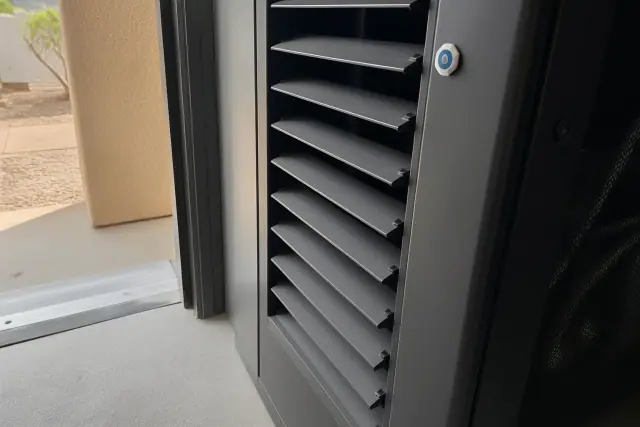
CO2, PM2.5, VOC, and humidity readings being compared at several occupied points instead of relying on one device in one room.
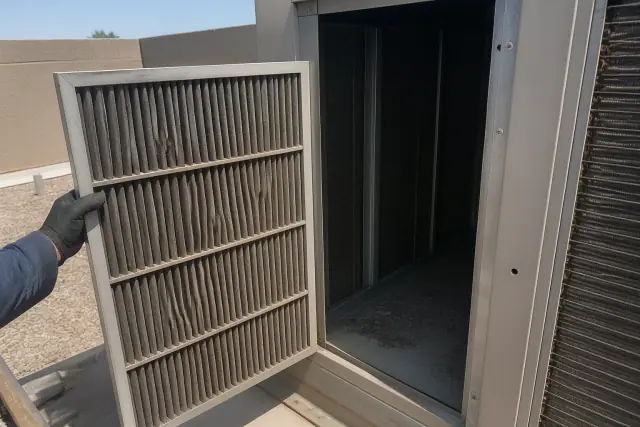
Filters, the outdoor-air intake, and the airflow path that can carry Phoenix dust, monsoon moisture, or smoke into the building.
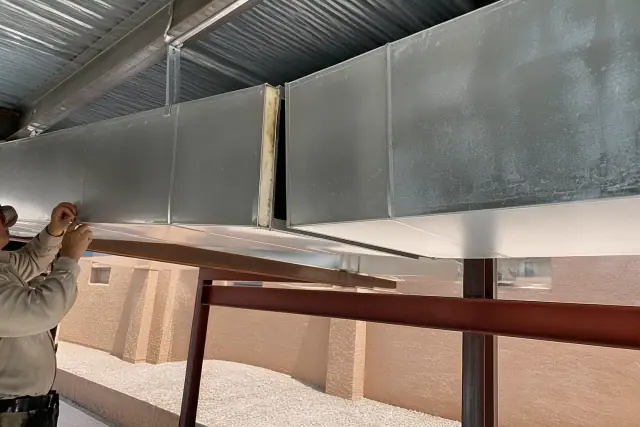
A mechanical inspection of duct integrity, ventilation rates, and filtration performance to explain what sensor readings alone cannot reveal.
Stale odors, dust buildup, humidity above 60%, headaches, or fatigue are reasons to document where and when conditions occur.
Dust storms, monsoon humidity swings, and periodic wildfire smoke can push outdoor AQI into Moderate-to-Unhealthy ranges on multiple days a year, affecting the air rooftop units pull inside.
Ventilation rates, ductwork integrity, and filtration performance show how the HVAC system moves, recirculates, and filters indoor and outdoor pollutants.
Persistent symptoms, recurring occupant complaints, or unclear sensor patterns call for professional testing that considers the entire mechanical system.
| Finding | What to Check | Action |
|---|---|---|
| Stale odors, dust, headaches, or fatigue | Record where and when symptoms appear | Compare patterns with occupied hours and HVAC operation |
| Humidity above 60% | Review humidity readings and mechanical operation | Investigate persistent moisture conditions |
| Elevated or changing CO2, PM2.5, or VOC readings | Measure at multiple occupied locations | Check ventilation rates and filtration performance |
| Dust storms, monsoon humidity, or wildfire smoke | Compare indoor readings with outdoor conditions | Inspect filters, outdoor-air intake, and ductwork |
| Persistent complaints or unclear readings | Use a full mechanical-system assessment | Arrange professional IAQ testing and HVAC inspection |
EPA data shows that several indoor pollutants can reach concentrations 2-5 times higher indoors than outdoors. Commercial buildings can trap cooking exhaust, cleaning chemicals, off-gassing materials, and pollutants recirculated by the HVAC system, so readings need to be interpreted in the context of sources and airflow.
Building size and testing scope affect how many readings and mechanical checks are needed. In Phoenix, commercial spaces may remain sealed for months of triple-digit heat, while the OSHA General Duty Clause and ASHRAE Standard 62.1 frame the ventilation and exposure benchmarks commercial buildings are expected to meet.
Can a phone measure indoor air quality? No; a phone can display outdoor AQI data from nearby monitoring stations, but it does not directly measure indoor CO2, PM2.5, VOCs, or humidity. What does professional testing cost? It typically runs $300-$1,200 depending on building size and scope, while DIY monitors run $50-$300.
Share the building size, recurring symptoms, and any CO2, PM2.5, VOC, or humidity readings already collected. A commercial HVAC inspection can connect those observations to ventilation, ductwork, and filtration conditions.